
Illness as a reward: Why Elder Paisios called sorrows "an advance" from God
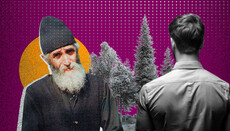
In the modern world, health is elevated to a cult. People spend enormous amounts on fitness and vitamins, and a sudden illness is perceived as a catastrophe and the collapse of all plans. Pain for us today is an absolute evil, a code error, a senselessness that must be immediately eliminated.

For church people, the logic is different, but even here there are distortions.
"God endured, and commanded us to endure!" we often hear for consolation. There is an involuntary idealization of sorrows as a "quality mark" of a true Christian.
But patience with humility is the lot of saints. We, ordinary people, under the burden of difficulties, often fall into despondency, and the plain advice "Endure!" is not enough to keep the soul from breaking.
Today we will turn to the experience of St. Paisios of Mount Athos. We will read his letters and understand why he considered one illness preferable to ten years of strict asceticism, and how to turn your pain into pure spiritual profit.
Divine maths
Worldly logic is simple: comfort is good, suffering is bad. A loving God should only give the former and protect from the latter. But Elder Paisios asserts that our earthly "accounting" is erroneous. From the perspective of eternity, sorrow and illness are the most profitable "investments" that the Lord can offer a person.
"Health is a great thing, but what illness brings to a person is an even greater good... It brings spiritual wealth. God knows what is beneficial for each of us, and accordingly gives us either health or illness," the saint asserts.
This does not mean that God is a cruel overseer who enjoys watching our suffering. The elder means something else: the Lord always desires our perfection. When a boss gives an employee the most difficult and responsible task, it is a sign of trust and imminent promotion. So too, sorrow is a sign that God is preparing the soul for something greater than temporary well-being.
Heavenly bank: paying off debts early
One of the most vivid images of Elder Paisios is the "Heavenly bank." Our entire life is the accumulation of either virtues (deposits) or sins (debts). And most of us live "on credit": we sin daily but are in no hurry to repay with repentance.
Illness in this coordinate system is a unique opportunity to "pay off" our sinful accounts here on earth, to appear before God pure. It is not punishment, it is purification.
"Illnesses help people 'pay off' many sins. <...> The heavenly reward for illness is greater than the reward for a feat. Physical ailment replaces asceticism. And this reward God gives to a person now when he suffers from pain," the elder is convinced.
The elder explains: God allows illness precisely when He sees that we have accumulated a critical "debt" that we ourselves, due to laziness or negligence, are no longer able to repay. Pain burns this debt faster than years of lukewarm prayer.
Cancer asceticism for slackers
But what to do if God allows us to fall ill not with a cold, but with something truly frightening? In the twilight of his years, Elder Paisios suffered from a severe form of cancer, endured excruciating pain and complex surgeries. But he did not just endure - he rejoiced. His words may shock a modern person accustomed to fleeing from any discomfort.
Paisios called cancer "asceticism for those who did not strive." If we do not have the strength for strict fasting, for night vigils, for thousands of prostrations - God gives us an illness that replaces all this abundantly.
Let's listen to the words of the saint:
"I received from my illness such benefit that I did not receive from all the time of my monastic endeavor. Therefore, I say that if I am offered on one scale - cancer, and on the other - ten years of fasting, vigils, and prayers, I will choose cancer."
This is a radical view. The elder tells us: do not fear diagnoses. If God allowed this, it means He has activated an "accelerated course" of salvation for you. What desert monks achieve over decades (humility, detachment from the earthly, remembrance of death), a sick person can receive in a few months in a hospital ward.
"God, in His goodness, gives us illnesses so that we may have a reward, receive a small 'advance' of heavenly joy already here," avva is convinced.
"I worry when I do not suffer"
The most dangerous state for a Christian, oddly enough, is not sorrows, but complete well-being. When a person has everything good: excellent health, plenty of money, no problems - carelessness creeps into the soul.
Elder Paisios considered this a cause for serious concern. It may mean that a person is so proud and weak that any touch of sorrow will break him. God protects him like a crystal vase, but this vase remains empty.
"When I am not ill, it worries me. The greatest sorrow is when we have no sorrows. If we do not endure sorrows, we cannot understand the pain of others, we cannot empathize," the elder believes.
Sorrow is a sign that God remembers us, that He is working with us, like a sculptor with stone, cutting away the excess with hammer blows to reveal a beautiful image. In the end, it is sorrows that make us more human.
Spiritual motto: "Glory to You, God"
But whatever we say about "purifying sufferings," illness itself does not automatically save. Thousands suffer in hospitals, but not all become saints; many become embittered, complain, or fall into despair. How to endure the torments of the flesh worthily?
The elder's answer is unequivocal - with gratitude. Venerable Paisios taught that grumbling annuls all suffering, while glorification turns it into a martyr's crown:
"'Glory to You, God' during pain is the highest prayer. Because in 'Lord, have mercy' there is a request, and in 'Glory to You, God' there is sacrifice, there is nobility, there is love."
The elder urges us to trust God as the best Surgeon. We do not hit the doctor on the hands when he hurts us with a scalpel because we know: he is saving our life.
Of course, we do not need to specifically seek illnesses or neglect medicine (Elder Paisios himself was treated and respected doctors). The main thing is not to fear when the Lord sends us such a trial.
If trouble or a diagnosis knocks on our door, we should not ask: "For what?" We need to breathe out and say: "Glory to God. Apparently, the time for my spiritual growth has come." St. Paisios taught us that illness is a bitter but the strongest medicine for the soul. And if accepted with trust in the Heavenly Doctor, it will surely bear fruit - peace, deep humility, and eternal joy.