
What is the price of God's love?
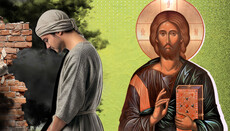
"Good Teacher, what shall I do to inherit eternal life?" asks the young man who ran up to Jesus. He is anxious. For him, this is the most important question of life.
Christ replies: «Why do you call Me good? No one is good but One, that is, God». Some interpreters see this as Christ supposedly denying His Divinity. Or perhaps, on the contrary? He raises the bar before beginning to answer the most important question not only for this young man but for every person for whom faith in God is not an empty sound.
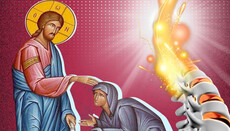
Such an answer may mean the following: 'If you call Me good, then you understand Who you are dealing with".
For in the absolute sense, goodness does not exist outside of God. All that we call good is a created reflection of the All-Good God.
But try to feel the intensity – and it seems, even the desperation –with which the young man asks his question. And yet he is rich, young, and devout. He has everything that many people only dream of. And still he does not merely walk but runs to Jesus. Out of passion, he falls to his knees before Him, as the Apostle Mark writes.
Something is clearly happening in his life. He has everything, yet there is no life. You can sense that inside there is a black hole. He hurries to Christ in the hope of receiving instructions on how to get rid of this void. He is confident that Jesus will provide a protocol that will help resolve his inner problem once and for all.
"What shall I do?" asks the young man, and Christ immediately shifts the conversation to the plane of being: "Who you should be."
The facade of righteousness
Keeping the commandments did not give the young man life. He built an ideal facade of righteousness, but somehow it did not give him peace. He thought he bought the original, but it turned out to be a fake. He thought he found something alive, but it turned out to be dead. Everything is there, and everything is dust. He wants water, but whatever is poured is vinegar. Rabbi, name me the price of Living Water, I will pay. Tell me, what is the cost of God's love?
Christ looked at the young man and loved him. Indeed, it is not often you meet among the Jews a wealthy pious person who is not satisfied with himself and his life. Before Him was an exclusive personality.
Christ looked at the young man not with the eyes of a prosecutor, but with the eyes of a physician who sees a cancerous tumor in a living, beautiful, young, flourishing body. And He began to operate.
"You have kept My commandments from your youth, that's wonderful, but it's not enough. You want true love. But love is the energy of God. No matter how hard you try, no matter what you do, no matter how pious you are, you cannot extract this energy from yourself. But you can take it from God with your hands. But for this, you must make them free. And they are occupied. You hold on to your world with a death grip. You are self-sufficient. You are rich and content with yourself. You are too fat. Shed the weight of your significance."
The price of the ticket to eternity
"Renounce your status, comfort, control over the future, free yourself from all attachments. Do you want to gain eternal life? Then die - and you will live. Die to your egoism. Die to what makes your person significant in your own eyes and in the eyes of those around you.
You want to receive God's love, but there is no one in the whole world more jealous than Him. He is not satisfied with your ten percent of morning and evening prayers, your weekly church attendance, your feats and labors. He wants more.
He wants the whole person, not just what a person gives to God on a residual principle – those very crumbs that remain after one has fully fed one’s ego.
And how can you meet God if your gaze is always directed at your own reflection in the mirrors of human eyes? Go, give away everything that makes you great in the eyes of others and in your own, and follow Me."
The young man was saddened. He did not think the price would be so high. What follows are some of the most mournful words in the entire Gospel. The young man "was saddened... for he had great possessions".
Feel this tragic moment. A person stands face to face with incarnate Love, looks into Its eyes... and, turning his back to It, leaves.
The gravity of the ego proved stronger than the gravity of Heaven. In the ringing silence, only the sound of receding footsteps is heard.
And Christ did not run after him, did not lower the price, did not call out after him, “All right, then give away at least half and come back.” No. His love respects our freedom, even when that freedom chooses the hell of loneliness. Christ allowed the young man to go away into his sorrow.
A camel and a needle's eye
And then follows the instruction, said to the apostles, and in their person to all of us: "It is easier for a camel to go through the eye of a needle...»
A soul burdened with cares, plans, fears, selfhood, pride, cannot enter the needle's eye leading to the heart of God. We are also too fat. We are too filled with ourselves. Yes, we love God, but honestly, hand on heart, not deceiving ourselves, we admit: we love ourselves and our comfort more. Our heart is not free, our ego lives there. Therefore, there is no room for God's love.
And we too can be horrified along with the apostles: "Who then can be saved?" But if the apostles' horror was connected with the fact that they thought, like many of their contemporaries, that the young man's material wealth was a sign of special God's blessing, a reward for righteousness, and therefore a guarantee of salvation, then we can be horrified by understanding something else.
We will never be able to love God to the point of self-forgetfulness. For us, our "I" and what is closest to it will always come first.
We do not have the strength that could make us hate our life with that sacred hatred that would give us freedom from our own egoism.
And here the words are spoken which, for me personally, may be the most important of all the words spoken by Christ: “What is impossible for human beings is possible for God.”
The fire of love
Christ did for me what I could not do for Him. He gave Himself entirely for me, for each of you. The Second Person of the Trinity, the Divine Logos, the Almighty, All-Powerful God, "from Whom, and through Whom, and for Whom are all things", deprived Himself of all His glory for us. He became beaten, poor, and naked. He allowed Himself to be mocked and tortured. He died painfully to give us Himself. To give us His glory, His grace, His love, and His eternity.
And now He looks at us just as He looked at this young man. And in His eyes is a silent question: "I did all this for you, gave Myself entirely. And what are you ready to do for Me, for My love? What are you ready to endure to ease My cross?"
Christ passed through the needle's eye of death and hell to tear it from the inside and make a breach in the wall that separated us from God.
Love is the energy of fire.
For those who are ready to give everything to God, this fire becomes warmth and light. For those who hold on to their own, this Fire becomes tormenting. The young man left in sorrow because he did not dare to burn to be resurrected. He chose the smoldering wick of his comfort and coziness instead of the blazing Sun of Divine love.
True love is incompatible with possession. In the Trinity, the Divine Persons do not “own” one another; they infinitely give themselves to one another. Christ called the young man to enter this divine music of Trinitarian love. He offered him an exchange: perishable gold and his ego for the Uncreated Light. But the price of admission seemed too high to the young man.
Unclench your palms
When you find yourself alone in silence, imagine that Christ is standing right in front of you at this very moment. And He is looking at you with the same infinite, warm, all-permeating love with which He looked at that rich young man. Christ sees in you what He created you for. Christ sees in you the holiness and purity which your soul is capable of. He sees in you the beauty that we ourselves do not see.
Christ stretches out His hand to us, but our fists are tightly clenched.
Look carefully at your hands and ask yourself: what am I holding on to? What have I gripped with a death-grip? I am sure it will not be money. Most likely it will be fear or hatred. Fear of the future. Hatred toward those who have brought hell, blood, groaning, tears, and bottomless grief into our lives. It will be fear for one’s small world, for one’s peace, for one’s life, for the life and health of loved ones.
Or perhaps it is the aching sorrow of losing dear people or one’s home, one’s small world. When you identify this “wealth” of yours, your hands will clench so tightly that your knuckles turn white. This is our camel.
Christ continues to look into our eyes and says: “Give this to Me. Give Me this fear, this hatred, this pain and this sorrow. Unclench your palms…” Try to unclench them. Make the effort to let this go and place it into God’s hands.
And if you find that you cannot do it, only one thing remains: to say, “Lord Jesus Christ, have mercy on me. I cannot do it. You Yourself accomplish the impossible within me.” But perhaps you will be able to.