
What to do when the fast no longer inspires
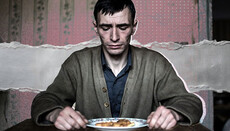
Somewhere toward the end of the second week, we discover something strange: we have grown bored. The sharp intensity with which we entered the first week of the Fast – the Canon of St. Andrew of Crete, the prostrations, the feeling that something real was happening – has somehow evaporated, and in its place there remains only a gray, flat surface. We read the morning rule with our lips, while in our head we are making a grocery list. By evening prayers, we no longer have the strength. The fasting food that in the first days seemed like a sign of participation in something lofty now just tastes bland. We feel nothing. And we are ashamed of it, in the way one is ashamed of a promise that was never openly broken, yet somehow was never truly kept.

The demon that comes exactly at noon
The Egyptian desert fathers of the fourth century knew this state intimately. Evagrius Ponticus described it with the precision of a clinical diagnosis: “The demon of dejection, which is also called the noonday demon, is the heaviest of all the demons. It instills in the monk a hatred for the place, for the very manner of life, and for labor. It makes him think that love has disappeared from the brethren and that there is no one to comfort him.” Evagrius called this state acedia – when time stops, the day feels fifty hours long, and all one wants is to abandon everything and walk away, no matter where.
We read that description and recognize ourselves with frightening accuracy, though we do not live in the desert but in the city, and despondency overtakes us not in a cell but in a crowded minibus on the way home from work.
The scenery changes, but the mechanism remains the same. By the third week, the mind that had enough novelty and adrenaline to carry it through the first week of the Fast has already adapted. The usual stimuli – food, entertainment, the endless scrolling of a screen – have been taken away, but nothing new has been given in their place. And so the brain sends up its signal: this is dull, this is empty, I want the noise back.
A shady tree in the middle of the desert
It is not by chance that the Church places the Sunday of the Veneration of the Cross precisely here, at the midpoint. The Synaxarion for that day offers a very simple image whose depth is not immediately obvious: “Just as weary travelers walking a long and difficult road, upon finding a shady tree somewhere, sit down beneath it, rest, and then continue their journey with renewed strength, so now also during the Fast, on the path of sorrows and ascetic labor, the holy fathers have planted in its midst the life-giving Tree of the Cross, which grants us relief and coolness.”
The Cross is brought into the middle of the church not for triumph, but for breathing space, for the strengthening of our exhausted powers.
The Church knows that we have run out of steam. She is neither surprised nor disappointed. It is as if she has planted a shady tree at the driest point of the road and says to us: sit down, catch your breath, and then keep walking. There is no need for heroics right now.
When the candy is taken away
There is something we do not like to admit. We like fasting as long as we enjoy fasting. We evaluate our spiritual life like consumers: if there is warmth after Communion, then it must have been a good Communion. If tears came during prayer, then the prayer must have been real. But if there is nothing – emptiness, silence, not a single spark – then something must be wrong: God is not hearing me, I am unworthy. So perhaps all these efforts should be abandoned, because clearly they are not working.
C. S. Lewis describes this mechanism vividly in The Screwtape Letters. God deliberately alternates periods of consolation with periods of dryness. He takes away the “candy” of emotion not because He has turned away, but because He wants us to learn to desire Him rather than to cherish within ourselves the feelings He once gave. To the devil it seems that a soul deprived of every desire to pray, yet stubbornly continuing to whisper the words of prayer, is about to break.
In reality, at that very moment it becomes invulnerable to him, because it is no longer acting from mood, but from free and conscious choice.
Mother Teresa lived in this dryness of soul for nearly fifty years. In her posthumously published letters there are lines like these: “There is such terrible emptiness within my soul... when I try to raise my thoughts to Heaven, they come back like sharp knives.” She did not feel God for decades. But her hands went on doing what they had always done – dressing wounds, feeding the dying, washing those from whom everyone else had turned away. Faith proved to be not a feeling, but a deliberate decision embodied in concrete works of mercy.
When the fast begins to work
Any experienced parish priest knows how the tone of confession changes from the first week to the third. At the beginning people complain: “I did not finish reading the canon,” “I broke the fast – it turned out the cookies contained dry milk.” By the third or fourth week, the outer cultural layer falls away like plaster from a wall. The same people come with darkened faces and say something entirely different: I snapped at my children, I hate my colleague, I want to throw everything away, I cannot do this anymore. Protopresbyter Alexander Schmemann wrote in his diaries that the Fast reveals our true measure. Once the anesthesia of fullness and habitual comfort is removed, our real inner landscape emerges from underneath – and it does not always look the way we hoped it would.
That is precisely the work of the Fast. Not the inspiration of the first week, but this nauseating encounter with our real self.
We thought the problem of fasting was food. It turned out that food was the easiest part. The real problem is that once the familiar noise is gone, we finally hear what is sounding within us – and it is far from a choir of angels.
Emptiness as a working space
The Psalmist prayed: “O God, Thou art my God; early will I seek Thee; my soul thirsteth for Thee, my flesh longeth for Thee in a dry and thirsty land, where no water is” (Ps. 62:2). That prayer is voiced not from the temple, but from the desert, where there is neither water nor consolation – and that is precisely why David’s thirst is real and not imagined.
We are standing at the equator of the Fast, and our inspiration is gone. We read the rule by force. We feel nothing. And perhaps for the first time in a long while, this is our real prayer – without emotional reward and without any guarantee that relief will come soon. It feels like nothing more than words spoken into emptiness, yet that emptiness – if we believe those who walked this road before us – is far from empty.
We do not know how, but it is precisely at this point – when we are bored, exhausted, and tempted to give up – that something begins to change. Not all at once, more like dawn on an overcast day: you cannot point to the exact moment when it became lighter, but suddenly you realize that you can already see the road, and that it is leading in the right direction.