
The spiritual legacy of a Georgian shepherd: An era of silence and mercy
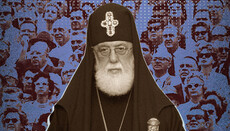
Yesterday, the quiet voice of Patriarch Ilia II fell silent, and the world around us suddenly seemed emptier. This is about the man who, for half a century, taught us to hear the music of God where gunfire thundered.
We live in an age when Orthodox internet spaces are overflowing with endless disputes. We divide ourselves into camps over everything, build barricades out of quotations from the Holy Fathers, and fire anathemas at one another. We treat arguments as proof of righteousness, and compromise as betrayal. And yesterday, a man left us who spent half a century proving the opposite. And with him, an entire era passed away.
The authority Patriarch Ilia refused to wield
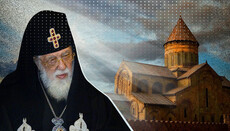
There is one figure that seems almost impossible to grasp if we are used to political ratings: for decades, the level of trust Georgians placed in Patriarch Ilia II never fell below ninety percent. No president and no political party, in any country in the world, has ever come close to such a number. With a single word, he could have brought hundreds of thousands into the streets. He could have brought down any government. In the end, he could have become the shadow ruler of Georgia, and no one would have dared object.
But he did none of this – not once. In a country that, during his patriarchate, passed through the collapse of an empire, civil war, economic ruin, and military conflict – in a country where political polarization often hardened into hatred – he remained the one man to whom every side still listened.
They trusted him because he never once used the people’s trust as a weapon against them.
We have grown accustomed to thinking of power as a resource that must be used. That moral authority is a lever, and that one not only can but should press it against one’s opponents. Life experience tells us: if you have strength, use it – otherwise, what is it for? Patriarch Ilia lived by another logic. He did not accumulate influence – he gave it away. He did not build a vertical of power, but himself became the point where the fault lines converged – and took all the pressure upon himself, so that the edifice of the Church would not collapse.
The composer on the patriarchal throne
There is one detail in the life of the late Primate of the Georgian Church that is usually mentioned only in passing, and yet it says more about Patriarch Ilia than an entire record of service. Ilia II wrote music. He did not merely “bless the creation of works” – he himself composed polyphonic pieces that are performed far beyond the borders of Georgia. He was also the author of an icon of the Most Holy Trinity that became one of the most recognizable images in the Georgian church tradition.
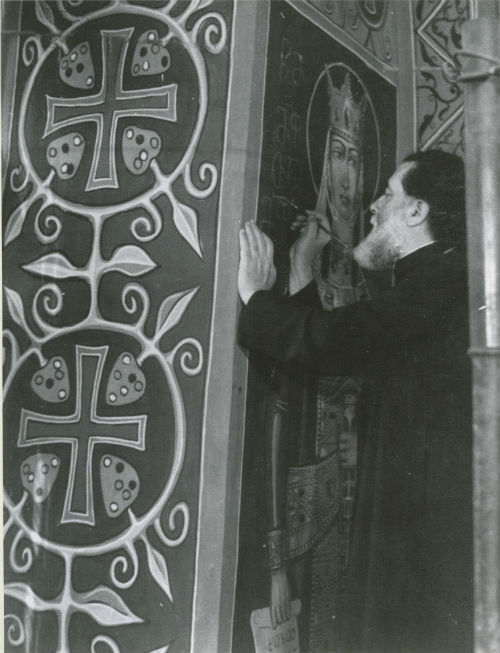
In those very years when the country was splitting apart, when politicians hurled accusations and blood ran in the streets, the Primate of the Georgian Church was writing music and painting icons.
He knew that beauty is not an ornament of life – it is a means of transfiguring it.
Where human words are exhausted and arguments prove powerless, melody and color remain. Patriarch Ilia showed that God speaks to people not only in the language of sermons. He also speaks through tonality and through color.
“We must learn to listen to one another”
His sermons were strikingly different from what we have grown accustomed to hearing in Orthodox media spaces. There were no denunciations in them, no search for external enemies. He did not recite lists of sins with which priests so often frighten their parishioners. Mercy lay at the heart of his words – that quiet mercy of which the Georgian Primate was always a preacher.
“There is no person who does not sin,” the Patriarch said, “but neither is there any sin that could overcome the mercy of God.” In these words one hears the voice of a shepherd who dealt every day with sinners – and went on loving them, in imitation of Christ.
“We must learn to listen to one another,” he once said, addressing young people. “Today, people have forgotten how to listen. They only want to speak.” Is this not a rebuke to all of us, who seek justice instead of love and forgiveness?
St. Silouan the Athonite wrote: “Our brother is our life. If we have gained our brother, we have gained God.” Patriarch Ilia seems to have taken those words literally. For him, there was no division between “our own” and “others,” between those “worthy” and “unworthy” of pastoral care.
Georgia, for him, was not an administrative territory, but his own family. A large family, difficult, scandal-ridden, often unbearable – but still a family that one does not betray.
What remains when the voice falls silent
Orthodox Georgians have been orphaned. More than that – the whole Orthodox world has been orphaned, a world now desperately lacking spiritual guidance. And there is a temptation to turn this loss into an informational occasion: to list achievements, assign judgments, compare the departed Patriarch with other Primates.
But Patriarch Ilia deserves something else, even after death. He deserves silence – the kind of silence in which we honestly ask ourselves: and what about us? Have we learned even a single thing from what he spent half a century teaching us?
The Apostle Paul wrote: “Love never fails. But whether there are prophecies, they will cease; whether there are tongues, they will be stilled; whether there is knowledge, it will pass away” (1 Cor. 13:8). The voice of Patriarch Ilia has fallen silent forever. But the love by which he lived – in restored churches, in music that will resound for centuries, in the tens of thousands of people for whom he became a spiritual father – will not disappear. Because that is how it was made, and because its Creator is God Himself.