
Not magic, but faith: Christian code of The Lord of the Rings

We often think of fantasy as a beautiful fairy tale – a place to escape from frightening reality. We imagine stories about elves and dragons as the work of dreamers hiding from life. But in the case of John Ronald Reuel Tolkien, everything was exactly the opposite.
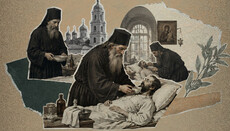
This book was born in hell. In November 1916, the young lieutenant Tolkien found himself in a military hospital. He was suffering from trench fever – epidemic typhus carried by lice in the filthy trenches of the First World War. He lay delirious, shaking with fever, while people were dying around him. He had just lost two of his closest friends in the Battle of the Somme.
And it was there, on crumpled scraps of government paper, with a trembling hand, that he began to write the first drafts of his mythology.
The Dead Marshes, through which the heroes of his book crawl toward the enemy, are not fantasy. They are a landscape Tolkien saw with his own eyes after artillery bombardments. That is why The Lord of the Rings resonates so deeply with us today. It is not a fairy tale. It is a chronicle of the survival of the human soul in the midst of catastrophe. We recognize ourselves in these frightened heroes who only wanted to drink tea in their warm homes, yet found themselves at the epicenter of world-devouring evil.
What this story is about
If we strip away swords and magic, the plot is terrifyingly simple. Absolute evil has awakened in the world – Sauron. He wants to turn a flourishing land into a concentration camp. For total victory, he lacks one final element – the One Ring. This is not jewelry. It is a coagulation of his will and his power.
And this terrible weapon falls into the hands of the most harmless creature imaginable – the hobbit Frodo. Hobbits are the “little people,” no taller than children. They love soil, food, and peace. They are not warriors.
The tragedy is that the Ring cannot be used against the enemy – it is itself evil and will enslave anyone who puts it on.
It cannot be hidden. It can only be destroyed in the fire of the mountain where it was forged. And that mountain lies at the very heart of the enemy’s land, in Mordor.
Little Frodo takes this burden upon himself. Together with his faithful friend Sam, he walks across the entire world, straight into the jaws of the monster, to burn the Ring. It is a suicide mission. They have no chance. Yet they go.
Why evil cannot create
When we watch the news, when we see ruined homes, we feel physically cold. Evil seems enormous, creative, inventive. In Tolkien’s book, the armies of darkness appear endless.
But if we look more closely, we notice a consoling detail.
In Tolkien’s world, evil is sterile. It has no creative power.
Orcs – the enemy’s terrifying soldiers – are not a newly created people. They are elves who were once abducted, tortured, and mutilated. Trolls are a grotesque parody of the ents – the good, tree-like giants.
Tolkien, a deeply believing man, encoded here the central Christian hope: evil has no source of life of its own. It is always a parasite. Satan is the “ape of God.” He cannot create anything new – he can only spoil, tear apart, and defile what the Creator has made.
For us, this means one thing: darkness is secondary. It exists only by stealing light. It is frightening and loud, but it has no roots in eternity. It is a colossus with feet of clay.
Strength in weakness
The second lesson we read between the lines is a hymn to the “little person.” Why is the salvation of the world not entrusted to the strong? Why does the wise wizard Gandalf or the mighty king Aragorn not carry the Ring?
Because power is the greatest trap of all. A great hero, given such authority, would inevitably want to “set things right” with an iron hand – and would not even notice the moment he himself became a new tyrant. Pride is an open door for evil.
The burden is entrusted to Frodo – a weak, half-starved little creature who weeps in fear and rubs his feet raw.
Here Tolkien reveals a biblical truth: “My strength is made perfect in weakness” (2 Corinthians 12:9).
It is precisely the weakness of Frodo and his servant Sam that becomes their chief armor. The Eye of Sauron, which understands only the language of power and domination, has a blind spot. It simply cannot imagine that someone would carry the Ring not in order to become a ruler, but to destroy it. In his worldview, humility is stupidity. He awaits armies – and against him come two exhausted wanderers.
Today, we feel like such “hobbits” ourselves. Grains of sand ground down by history. We think: “I am nobody. I cannot change anything.” But this story tells us otherwise: it is precisely in our humanity, in our refusal to become beasts in response to beastliness, that there lies a power evil cannot calculate.
Frodo’s weapon is not a sword. His weapon is mercy. He pities the wretched creature Gollum who stalks them. And in the end, it is this mercy that saves the world.
The bread that strengthens the will
There is a detail in the book that makes the heart tighten. Lembas – the elven waybread. As the heroes approach the very pit of hell, ordinary food runs out. The water is poisoned. The air is toxic. They have no physical strength left to take another step. They survive only because of this bread. Tolkien describes its remarkable property: it is not delicious like a pastry, but it “strengthens the will.” The weaker you are, the more strength it gives.
For us, as Christians, this image is transparent. Lembas is the Eucharist.
We know this Bread. When our human resources are exhausted, when the news makes our hands fall limp and we want to lie face-down against the wall, we have the Chalice. This is a resource that does not depend on economics or politics. It is nourishment that gives strength to live when, by every law of logic, there should be no strength left.
A star over the wasteland
And finally – a scene that heals the soul. Sam and Frodo are in the heart of Mordor. Around them is scorched earth, ash, absolute darkness. There is no hope. Frodo sleeps, utterly spent. Sam, a simple gardener, stands watch and looks into the black sky.
And suddenly he sees, through a rift in the leaden clouds, high above the jagged peaks of rock, a white star flare for a moment.
“He was struck by the thought that in the end the Shadow was only a small and passing thing – there was light and high beauty forever beyond its reach.”
At that moment, despair dies in Sam’s soul. He understands: yes, it is dark and painful here and now. Yes, evil seems enormous. But it is only a cloud covering the sky. A star cannot be extinguished by a missile. Beauty cannot be killed by a decree. Truth exists even when we cannot see it.
We are all Sam Gamgee now. We sit in the darkness. Our task is to lift our heads. Our faith is not a guarantee that we will not suffer. It is the knowledge that above any darkness, above any war and death, the Star always shines. And it quietly tells us: “The shadow will pass. The light is eternal.”