



The city danced itself to death – to music commissioned by the authorities
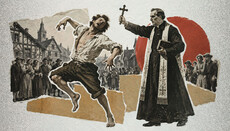
In the summer of 1518, the people of Strasbourg danced themselves toward death to music provided by the city authorities. Only the Church finally brought the epidemic to an end.
Picture the scene: Strasbourg, 1518. On a narrow medieval street in the sweltering summer heat, a lone woman is dancing.
There is no celebration, no music, no reason for it – and she does not stop.
Her name was Frau Troffea. Days later, she was still dancing frantically, except now other townspeople had joined her. Within a week, there were 34 of them. Within a month – dozens, perhaps even hundreds.
But this was no festive carnival. The people were suffering. They screamed, wept, begged for help – and still their bodies kept jerking and twisting as if they no longer obeyed their owners.
What was a city council supposed to do in a situation like this? Strasbourg’s magistrates had no idea either. So the authorities turned to the physicians.
Treating dancing with more dancing
The doctors came, examined the frenzied dancers, and delivered a clinical-sounding diagnosis: overheated blood.
Their reasoning was simple and, by the standards of the time, perfectly scientific – excess heat had to be expelled through movement. The sufferers needed to dance themselves to exhaustion, and then the illness would pass on its own.
The city authorities took the advice literally – after all, why distrust the doctors?
A wooden stage was erected in the Grain Market. Musicians, flutists, and drummers were hired. The plan even seemed prudent: this way, the sick could dance under supervision.
And then came the part no one had anticipated. The medieval dance floor did not cure anyone. Quite the opposite – it drew crowds of spectators eager to watch the strange spectacle.
And the spectators, without meaning to, pulled more and more people into the dance – the way a crowd can sweep a random passerby into its whirlpool.
3.jpeg)
According to the chronicles of architect Daniel Specklin, people were dying every day from exhaustion and heart attacks. How many exactly is difficult even to imagine.
The doctors had no wish to harm their patients. They acted with the best of intentions, unaware that their theory was not merely wrong. It had turned the town square into a machine that produced new sufferers faster than anyone could hope to cure them.
A complete about-face
By the end of August, even the most stubborn official could see what was happening: the louder the music, the more frenzied dancers appeared.
The magistrates were forced to admit their mistake and reverse their own decision. Drums and tambourines were banned under threat of punishment.
The authorities did leave respectable citizens one loophole: dancing was still permitted at weddings and first Masses, but only to string instruments.
It was the first sensible decision the authorities had made in a month and a half of desperate attempts to cure the mass psychosis. They had removed what was feeding the fire.
But they still could not put the fire out.
Three days on the road – and complete silence
Then the Church entered the story with a remarkably simple proposal: the sufferers did not need to be forcibly “treated.” They needed to be taken away from everything that was overstimulating them.
The dancers were loaded onto carts and taken to the rock chapel of St Vitus. The journey lasted three days.
And what happened at the shrine? Nothing spectacular. Each sufferer was given a small cross to hold. Red shoes were placed on feet torn and wounded by the frantic dancing, and crosses were drawn on the shoes with blessed oil. The footwear was sprinkled with holy water while prayers were offered to St Vitus. Before his carved image, quiet and measured Masses were celebrated.
The contrast could hardly have been sharper. In the city – a stage, a crowd, drums, the shouting of spectators. Here – dim light, prayerful silence, and one suffering person standing before the image of a saint.
A week passed, then another – and the stream of afflicted pilgrims traveling to Saverne dried up.
By early September 1518, the epidemic of mass psychosis was over.
The second wrong diagnosis
At this point, the story almost begs for a neat and uplifting ending: superstitious doctors got it wrong, while the wise Church saved the day.
It would make a satisfying moral. But history has an unexpected twist that spoils the tidy picture.
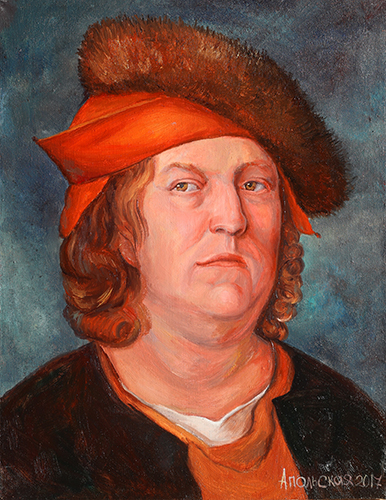
Eight years later, Paracelsus visited Strasbourg. Yes, that Paracelsus – the man often held up as a model of sober scientific thinking against the supposedly superstitious medieval world. He questioned eyewitnesses and described the events in his treatise Opus Paramirum, dividing pathological dancing into three categories: dancing caused by imagination and anger, by lust, and by physical causes.
So what did he conclude?
One might expect the most rational man of his age to have shown at least a little compassion for the unfortunate woman whose dancing had set off the public frenzy.
But Paracelsus was severe. He classified Frau Troffea’s case as dancing “from lust.” According to his theory, she danced in order to spite and humiliate her husband, “feigning illness as convincingly as possible.” Other women, he wrote, joined her for the same “indecent” motives.
The most learned man of his time was no less mistaken than the doctors with their theory of overheated blood. Only instead of making a medical diagnosis, he passed a cynical moral judgment on a woman about whom he actually knew almost nothing.
What really stopped the epidemic?
What, then, actually happened in Strasbourg that summer?
Historian John Waller, who spent years studying the events of 1518, reconstructs the wider context – and the picture is bleak.
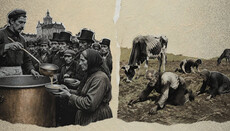
Alsace had just endured a devastating crop failure. The city was exhausted by hunger, outbreaks of syphilis and smallpox, and deep social distress. At the same time, the population lived with an old fear of the “curse of St Vitus” – the belief that the saint could both inflict a compulsive dance and heal it.
“When there are the right beliefs and a high degree of desperation and fear,” Waller argues, “then the dancing plague becomes possible.”
This was not demonic possession in the literal sense, although that is exactly how it may have appeared to contemporaries. Historians describe what happened as a mass psychological breakdown born of despair.
Hungry and exhausted, people found the only language available to them – a language in which the body itself could scream that life had become unbearable.
And that inner scream spread from one person to another.
What did the authorities do? They answered that scream with even more noise – and with an even bigger crowd of spectators.
And what did the Church do? It answered with silence and prayer. And with attention to each individual sufferer – in this, imitating Christ.
That, perhaps, is the whole difference between those who inflame panic and those who quiet it.
The authorities built a stage.
The Church removed the audience.
And perhaps that is the central lesson of the entire story: the best remedy for despair is not to drown out grief with something else, but to remain quietly alone with God – the One who can comfort every person who suffers.