
On the government's failure on American "religious track"
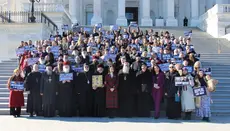
More than a month has passed since the large-scale meeting in Congress of 180 clergy and believers from American Orthodox denominations (Serbian, Antiochian Churches, OCA and ROCOR) in defense of the UOC. Yet supporters of the Ukrainian authorities have continued trying to smear and discredit them.
In December, Forbes ran an article by Ukrainian pro-government author David Kirichenko that branded the meeting’s participants "Kremlin propagandists." After letters to the editorial office warning of legal action, Forbes removed the defamatory piece.
Here, a plain point must be made: there is a class of media content known as paid placements, where sponsors pay substantial sums to have a preferred narrative published. We strongly suspect Kirichenko’s Forbes article belonged to that category. And as for who was promoting it – and who was eager to portray Americans criticizing the Ukrainian authorities for persecuting the UOC as “Kremlin agents” – it is not hard to guess.
Since then, no major outlet has carried anything similar. Apparently, reputation costs more than any fee. And so the authorities had to settle for the English-language Ukrainian site Kyiv Post, which published yet another Kirichenko piece, “Why the ROC Is Lobbying Its Interests in Washington.” Just as in the removed Forbes article, Kirichenko tried to convince readers that there is no persecution of the UOC at all, and that the American clergy and believers who defended it are nothing but Russian propagandists.
The article is massive – a sprawling mix in which everything is thrown together: an attempt to depict the UOC as a tiny, fringe body; selective handling of criminal cases against clergy; efforts to “prove” the supposed “Russianness” of the Serbian Church and the OCA; attacks on UOJ in Ukraine and the United States; and even an attempt to portray Congresswoman Anna Paulina Luna as a Kremlin sympathizer.
The only concrete result the sponsors of the piece managed to extract was a promotional boost from Republican Don Bacon, whom the author mentioned in the article. Bacon wrote on X that Orthodox Americans defending the UOC “take orders from the Kremlin” and engage in “Russian propaganda.” It is difficult to see why a serious politician would agree to publish accusations so flimsy, so crude, and so transparently absurd.
Yes, Russia speaks about the persecution of the UOC – and yes, it benefits from doing so. But Russia also benefits from highlighting disgraceful corruption in Ukraine’s energy sector involving top officials. Does that mean NABU and the journalists who cover corruption scandals are “Kremlin agents”? That is exactly the logic being pushed here – and it collapses the moment it is applied consistently.
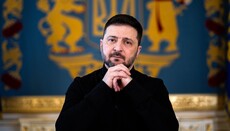
All signs point to one conclusion: Ukraine’s authorities are losing the religious front in the United States, decisively. An indirect confirmation may be Zelensky’s decree dismissing his adviser Andrew Mack. According to media reports, he had been lobbying the interests of the Ukrainian authorities in the U.S.
But he failed.