
What really happened during the Bulgarian Patriarch's visit to Phanar?
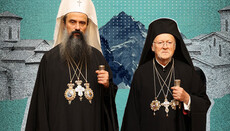
The visit of Bulgarian Patriarch Daniel to Constantinople at the end of December 2025 became an event that outwardly appeared as a common gesture of brotherly communication between two Local Churches. However, behind the formal protocols, ceremonial speeches, and mutual greetings lies a whole tangle of serious problems, related both to the internal situation in the Bulgarian Orthodox Church and to the pan-Orthodox conflict over the recognition of the OCU.
To understand what exactly happened at the Phanar, it is important to consider this visit not in isolation but in a broader church-political context.
Why this visit took place at all
It should be noted that the trip of Patriarch Daniel to Constantinople was not his personal initiative. On the contrary, he was bound by the decisions of the Holy Synod of the Bulgarian Orthodox Church, within which there has long been a group of hierarchs aligned with the Ecumenical Patriarchate and supporting its course.
A distinctive feature of church governance in Bulgaria is that the Primate does not have the degree of freedom enjoyed, for example, by the Patriarchs of some other Local Churches. He is simply obliged to implement the decisions of the Synod, even if he personally disagrees with them.
As a result, Patriarch Daniel found himself, in essence, in the position of a hostage to the synodal mechanism of the Bulgarian Church.
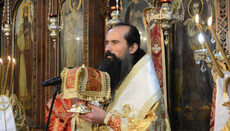
It should also be highlighted that the composition of the delegation accompanying him to the Phanar cannot be called accidental. For example, among the delegation members was Metropolitan Cyprian of Stara Zagora, who on May 19, 2024, notably concelebrated with Patriarch Bartholomew together with Yevstratiy Zoria. Of course, it cannot be asserted that the entire delegation belongs to the so-called "pro-Phanariot wing" in the Bulgarian Church. However, the presence of the Metropolitan of Stara Zagora suggests that the visit, in a certain sense, can be seen not only in the context of rapprochement with Constantinople but also in the context of the further implementation of its decision regarding the OCU.
Award as a symbol and as a signal
The decision of the Synod of the Bulgarian Church to award Patriarch Bartholomew with the highest church award – the Order of St. John of Rila – deserves special attention. Formally, the award was presented "for overcoming the schism" in the history of the Bulgarian Church. And there is indeed a reason for such an award. In 1998, in the Sofia Cathedral of Alexander Nevsky, a Pan-Orthodox Council was held, initiated by Patriarch Bartholomew. But in reality, the schism was overcome not thanks to this council, but due to changes in the Bulgarian political landscape.
Therefore, the subtext of awarding the order to Patriarch Bartholomew has its peculiarities.
The fact is that in the Greek media, the award was presented as confirmation that the Ecumenical Patriarch is supposedly a peacemaker and healer of schisms in world Orthodoxy. It is clear that presenting this award in such a way has a single purpose: to show that Patriarch Bartholomew is acting correctly not only in relation to Bulgaria but also to Ukraine. In essence, the Greek media tried to use this award to justify Constantinople’s actions in granting the Tomos to the OCU.
Two speeches – two ecclesiologies
The key to understanding what happened at the Phanar is to compare the speeches of the two Patriarchs. At first glance, their words may seem to address the same themes: the unity of the Church, brotherhood, love, and fidelity to Tradition. However, a closer listening reveals that they reflect two different understandings of the nature of the Church and authority within it.
Thus, in his speech, Patriarch Bartholomew consistently emphasizes the special role of the Ecumenical See in world Orthodoxy. He speaks of the Phanar as the "Mother Church", of the throne "which embraces and crowns the entire earthly expanse," and again emphasizes the primacy of the Ecumenical Patriarch in preserving the unity of Orthodoxy.
At the same time, Patriarch Bartholomew believes that the rejection of his decisions (for example, the recognition of the OCU) is only "particularities" that do not affect unity: "Differences on particular issues within our Church do not affect unity and agreement on essential matters." Moreover, he insists that any criticism of Constantinople's actions is either "deception" or "deliberate distortion of the truth": "Recently, some have been trying to create schisms in this skillfully composed mosaic of holy stones, presenting the Great Church as acting arbitrarily and transgressing the statutes. This is undoubtedly deception and deliberate distortion of the truth."
According to him, it turns out that all those who do not accept the decisions of the Phanar (including on the OCU) are destroyers of unity and people driven by "selfish ambitions": "The special position of the Ecumenical Archbishop among the Orthodox has recently become a stumbling block, as for some, logic and self-interest prevail, leading to attempts to overturn Tradition."
It is especially important that, for Patriarch Bartholomew, the unity of the Church is directly linked to the recognition of the special status and authority of the Constantinople Throne. In this logic, "unity" does not mean agreement among the Churches, or even Eucharistic communion, but rather compliance with the decisions of the Phanar.
The response of Bulgarian Patriarch Daniel is fundamentally different. He clearly and unequivocally emphasizes that the Head of the Church is Christ, not any earthly primate: "Although in separate church and canonical jurisdictions we remain spiritually united – in one Church with one Shepherd and Head, our Lord and God and Savior, the only true Teacher Jesus Christ, who is the same yesterday, today, and forever."
Patriarch Daniel speaks of the Church as the Body of Christ, in which all are united by one Spirit, and emphasizes the conciliar nature of church life: "The Church is conciliar by its nature. It solves all problems in a conciliar way."
In essence, the words of Patriarch Daniel are a response to the decision to grant the Tomos to the OCU, which the Ecumenical Patriarch made unilaterally. To further emphasize the importance and necessity of conciliar decisions on such issues, the Bulgarian Patriarch continued: "And you once again testified to this conviction through the convocation of the Pan-Orthodox Extra-Jurisdictional Council in the city of Sofia in 1998, on the initiative of the Bulgarian Orthodox Church – the Bulgarian Patriarchate. Through the conciliar decisions, the unfortunate schism that was tearing apart the unity of the Bulgarian Orthodox Church at that time was overcome."
That is, Patriarch Daniel clearly indicated that only in such a context (conciliar decision) the "Ukrainian issue" should have been resolved.
In fact, the Primate of the Bulgarian Church reminded Patriarch Bartholomew of the classic Orthodox teaching: decisions affecting the entire Church cannot be made unilaterally. They must be the fruit of conciliar deliberation, not the expression of the will of one center, no matter how ancient and respected it may be.
This is precisely the root of the divergence between the two Patriarchs.
Was there a discussion about the OCU? In fact – yes
Although the official reports do not mention a direct dispute, the very structure of the speeches and the context of the visit allow us to assert: a serious, albeit veiled, discussion on the issue of the OCU took place between the Patriarchs.
Patriarch Bartholomew essentially demands recognition of his model of church governance, within which Constantinople has the right to unilaterally "correct" situations in other Local Churches.
Patriarch Daniel, in turn, cautiously but consistently defends the principle of conciliarity and the impossibility of recognizing the OCU without pan-Orthodox consent.
This position is not new: Patriarch Daniel has expressed it previously. For example, he has repeatedly stated that Patriarch Bartholomew granted the Tomos to the Ukrainian schismatics without their repentance, uniting them into the OCU and recognizing this entity as the canonical Orthodox Church of Ukraine. Furthermore, even as Metropolitan of Vidin, Patriarch Daniel referred to the Tomos of the OCU as a threat to the entire Orthodox world. Importantly, he has remained steadfast in this position despite significant pressure from the so-called pro-Phanar party within the BOC.
A particularly significant moment was the commemoration of the head of the OCU, Epifaniy Dumenko, during the service at the Phanar in the presence of Patriarch Daniel. Formally, the Bulgarian Church has not recognized the OCU. However, the very fact of such a commemoration confirms the practice of "creeping recognition" employed by the Ecumenical Patriarchate. It is clear that at the Phanar, they hope that everyone will gradually get used to this commemoration, accept it, and eventually recognize the OCU. This scenario has been used not only against the Bulgarian Church but also against other Churches A particularly significant moment was the commemoration of the head of the OCU, Epiphanius Dumenko, during the service at the Phanar in the presence of Patriarch Daniel. Formally, the Bulgarian Church has not recognized the OCU. However, the very fact of such a commemoration confirms the practice of 'creeping recognition' employed by the Ecumenical Patriarchate. It is clear that at the Phanar, they hope that everyone will gradually get used to this commemoration, accept it, and eventually recognize the OCU. This scenario has been used not only against the Bulgarian Church but also against other Churches A particularly significant moment was the commemoration of the head of the OCU, Epiphanius Dumenko, during the service at the Phanar in the presence of Patriarch Daniel. Formally, the Bulgarian Church has not recognized the OCU. However, the very fact of such a commemoration confirms the practice of 'creeping recognition' employed by the Ecumenical Patriarchate. It is clear that at the Phanar, they hope that everyone will gradually get used to this commemoration, accept it, and eventually recognize the OCU. This scenario has been used not only against the Bulgarian Church but also against other Churches A particularly significant moment was the commemoration of the head of the OCU, Epiphanius Dumenko, during the service at the Phanar in the presence of Patriarch Daniel. Formally, the Bulgarian Church has not recognized the OCU. However, the very fact of such a commemoration confirms the practice of 'creeping recognition' employed by the Ecumenical Patriarchate. It is clear that at the Phanar, they hope that everyone will gradually get used to this commemoration, accept it, and eventually recognize the OCU. This scenario has been used not only against the Bulgarian Church but also against other Churches – recall the joint Liturgy of the Ecumenical and Romanian Patriarchs in Bucharest.
Internal Conflict in the Bulgarian Church
It is important to understand that the issue of the OCU is not only an external problem. Within the Bulgarian Church, there is already tension between part of the episcopate and a significant portion of the laity. For example, immediately after the concelebration of Bulgarian hierarchs with OCU representatives, priests of the Bulgarian Church demanded that their bishops be tried. In addition, the faithful of the Bulgarian Orthodox Church organized a protest near the building of the Holy Synod against the hierarchs who had concelebrated with the OCU representatives at the Phanar.
The fact that not everyone in the Bulgarian Church is ready to accept the OCU is also confirmed by a petition against Patriarch Daniel’s trip to the Phanar. The authors of the petition opposed not only the visit but also joint services with Patriarch Bartholomew. The text of the petition explicitly mentions distrust toward the canonical behavior of the Ecumenical Patriarch, his ecumenical initiatives, and fear of the destruction of Orthodox identity.
Although the petition was signed by a relatively small number of people (550), its very appearance is very telling. It indicates that the topic of recognition of the OCU and relations with the Phanar has gone beyond the narrow synodal circle and has become a sensitive issue for ordinary believers in Bulgaria.
Therefore, it can be said that, despite pressure from the "pro-Phanar party", it is highly unlikely that the Bulgarian Orthodox Church will recognize the OCU in the near future. There are several reasons for this.
First, Patriarch Daniel’s position remains principled. Second, there is no complete consensus within the Synod of the Bulgarian Church on this issue. Third, a significant portion of the faithful is openly unprepared for such a step.
Thus, recognition of the OCU under current conditions could lead to a serious internal crisis, potentially resulting in an open conflict between the hierarchy and the laity.
In any case, it should be acknowledged that
Patriarch of Bulgaria’s visit to the Phanar once again demonstrated that the crisis in world Orthodoxy is far from being resolved.
Behind the words about “unity” lie different, sometimes opposing, understandings of what the Church is and how decisions within it should be made. The Phanar continues to insist on its preeminent and effectively supra-conciliar role. The Bulgarian Patriarch – albeit cautiously – still reminds that the only Head of the Church is Christ, and that the path of the Church is the path of conciliarity.
It is precisely between these two approaches that one of the main lines of division in the Orthodox world runs today. Whether, with God’s help, we can heal this division remains to be seen.