



Pochaiv procession as a popular referendum on faith
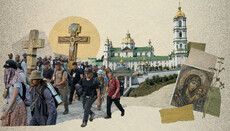
Some 35,000–40,000 pilgrims walked more than 200 kilometers to Pochaiv despite bans, inspections, and media attacks – more than in any other year since the war began.
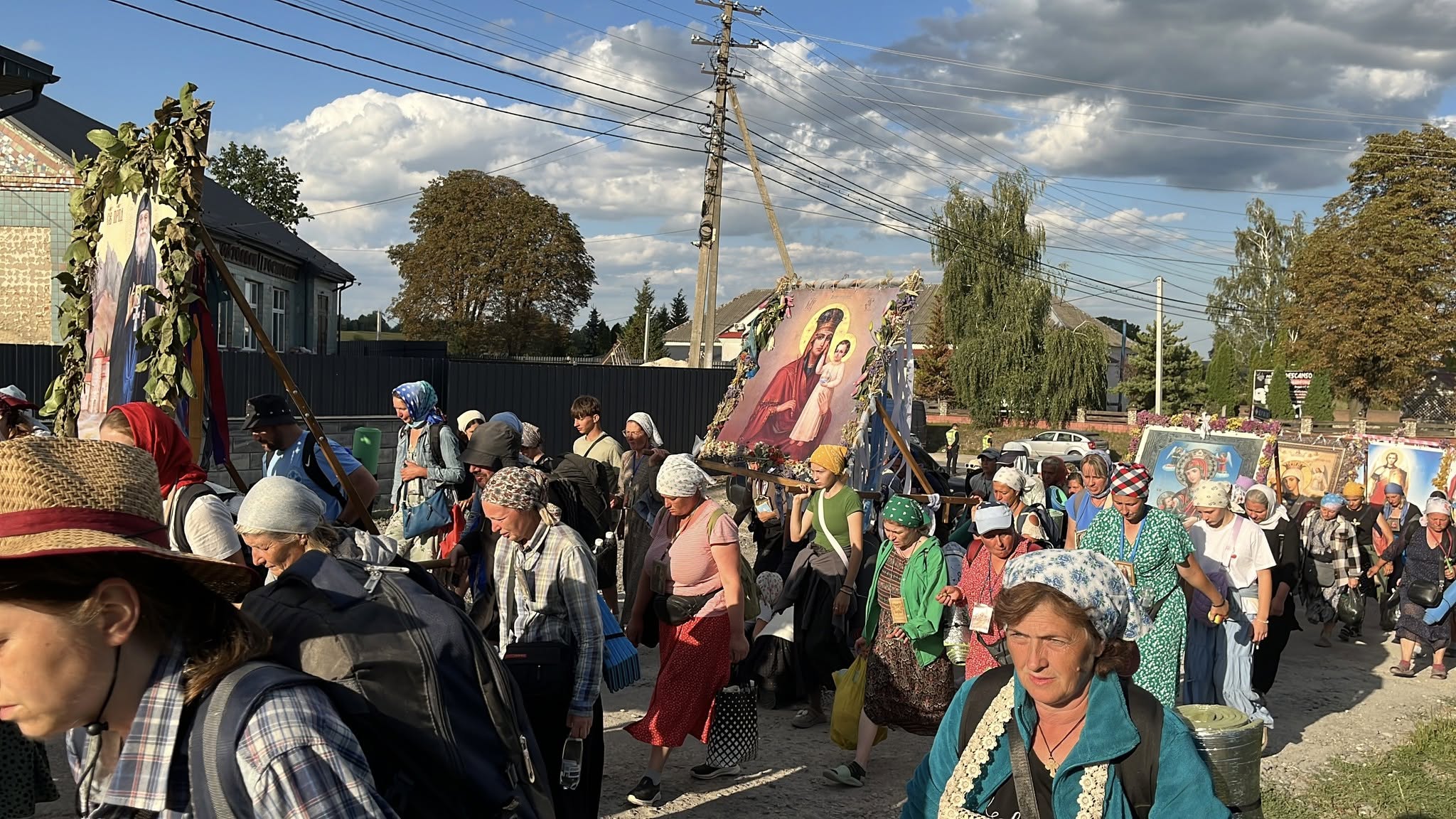
At around noon on August 25, the religious procession from Kamianets-Podilskyi entered the Holy Dormition Pochaiv Lavra. According to a preliminary UOJ estimate, between 35,000 and 40,000 people took part. It took more than an hour for the column to enter the monastery – a continuous stream of people with no gaps.
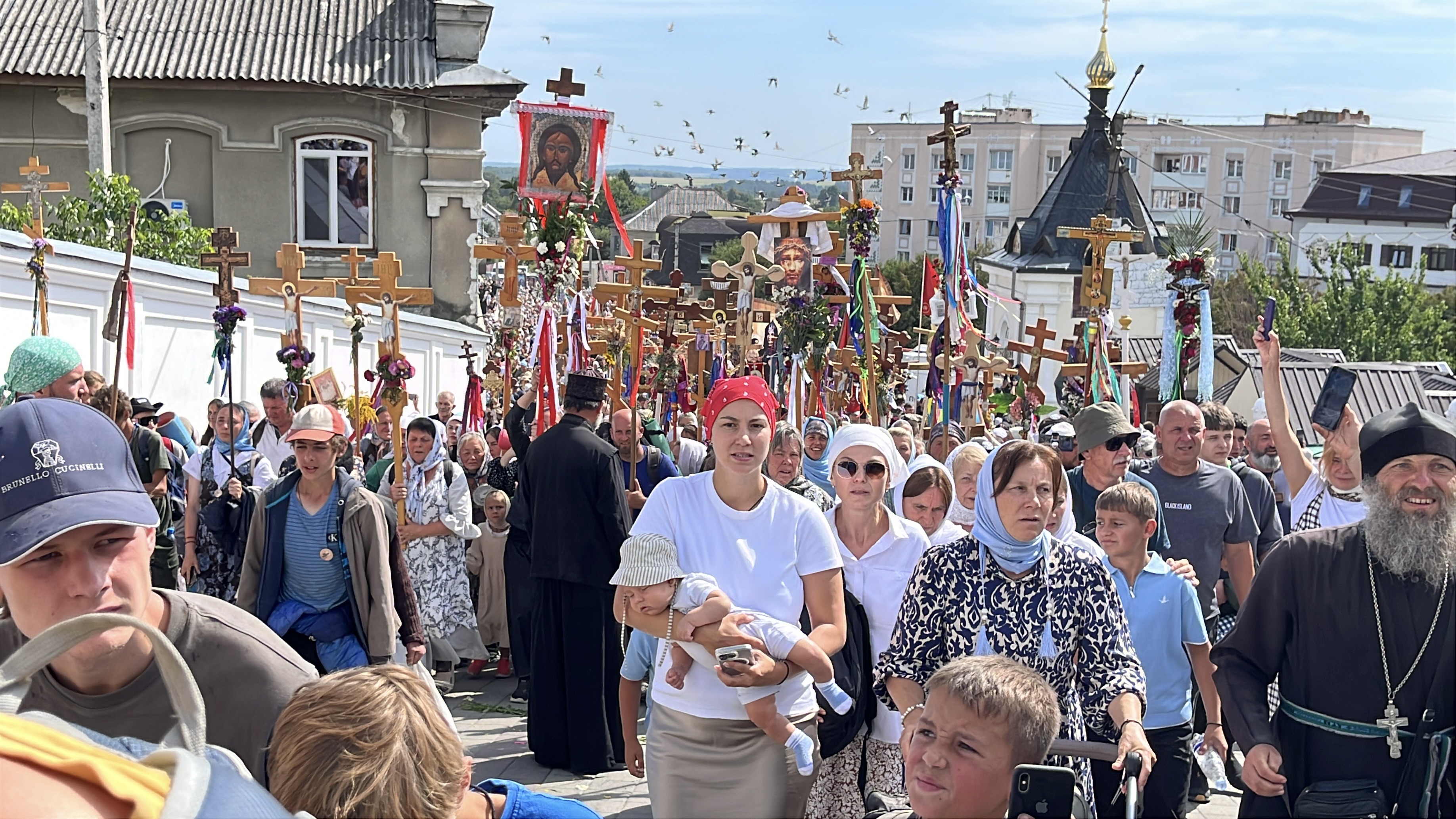
This was the largest procession of any wartime year. For comparison, about 7,000 pilgrims reached the Lavra in 2022 and roughly 30,000 in 2024. No exact figures were given for 2025, but visually there were fewer participants than in 2026, when attendance returned to prewar levels.
It is worth noting that this happened in a country whose population has shrunk dramatically over those years: some people are at the front, some are abroad, some are in occupied territories, and some have been killed. In other words, there are fewer Ukrainians – yet more people took part in the procession.
That simple arithmetic alone is worth thinking about. But it is not the only thing that deserves attention.
More than 200 kilometers in the August heat
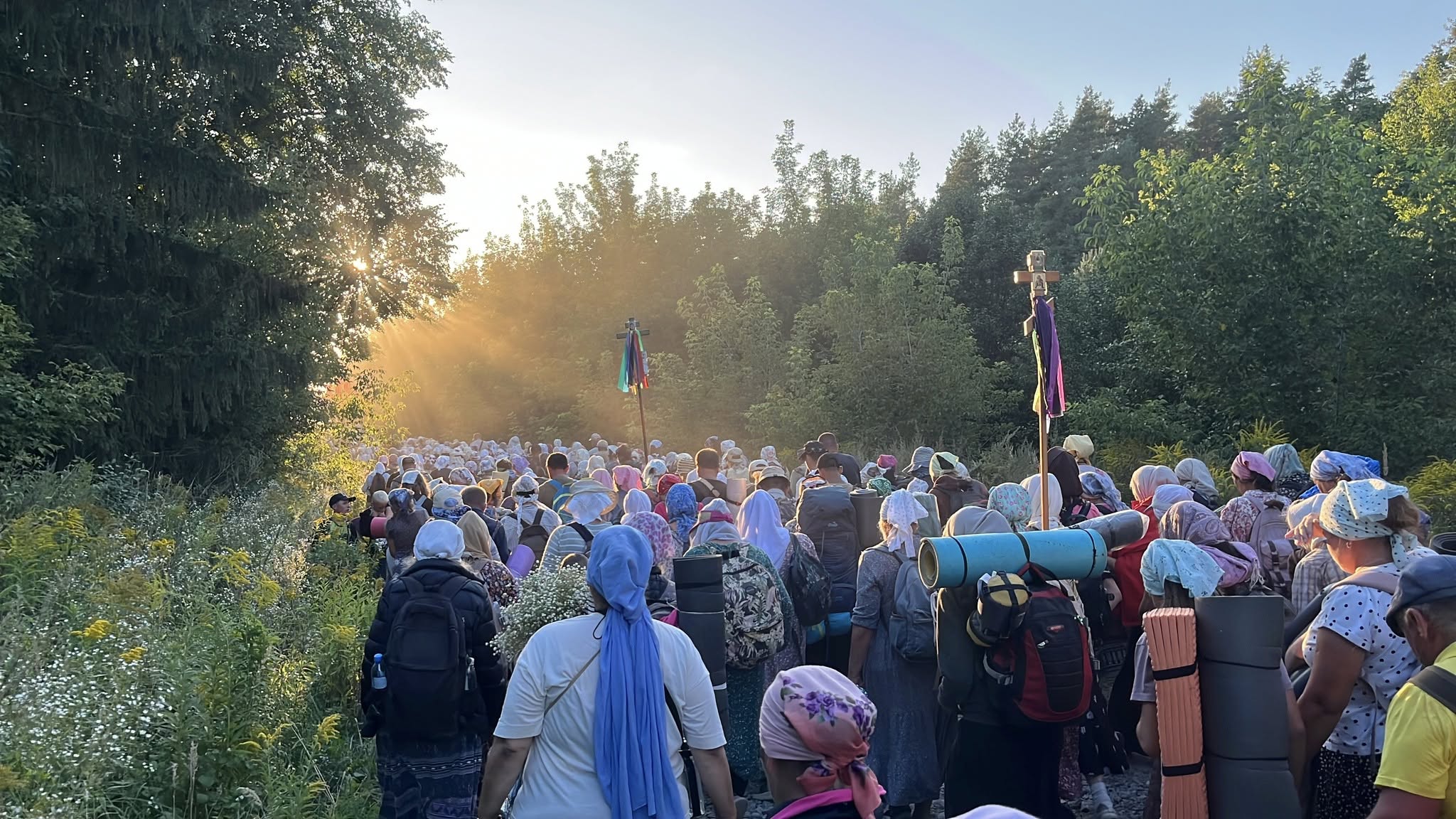
For those who have never taken part in a multi-day religious procession, it is worth explaining what pilgrims actually endure. This is not a bus tour, nor is it a rally where people are brought in for two hours. The route from Kamianets-Podilskyi to Pochaiv is more than 200 kilometers, covered on foot in six or seven days.
Pilgrims walk through the August heat, over scorching asphalt and dusty dirt roads. They sleep in fields, village churches, people’s yards, and forests. Feet are often rubbed raw and bleeding; there are cases of heatstroke and physical exhaustion. Add to this the fact that many people walk carrying children, there are many elderly pilgrims, and even pregnant women. At the same time, everyone has to keep up the pace and avoid falling behind. In other words, it is extraordinarily hard.
No administrative order can make a person do this. No boss can force an employee to walk 200 kilometers, especially in that heat and with a tent on their back. A religious procession cannot be organized from above, just as it cannot truly be banned. Yet there were plenty of attempts to ban this one.
The background against which it happened
Pressure on the Pochaiv procession has been going on for years. Back in 2023, the Ternopil Regional Defense Council, followed by the regional council, adopted a decision banning UOC believers from processing to the Lavra and instructed the police and SBU to enforce it.
This year, the story repeated itself, though less sharply. On July 30, the executive committee of the Demydivka settlement council in the Rivne region completely banned the procession from passing through the community. The UOC Vinnytsia Eparchy was forced to cancel its traditional procession from the Brailiv Monastery. The Ternopil Regional Military Administration said it had received no applications at all seeking approval for the procession – effectively establishing in advance a position under which any movement of people could be declared unauthorized.
At the same time, pressure continued on the Lavra itself: findings by the State Service for Ethnopolitics and Freedom of Conscience regarding alleged ties between the monastery and the Russian Orthodox Church, inspections of the use of preserve property, and talk of terminating the lease. Some media outlets published reports openly warning citizens that the procession was “unsafe.”
In other words, anyone planning to walk to Pochaiv in August 2026 knew what they were signing up for. They knew the procession could be declared illegal at any moment, that they could be filmed and branded an FSB agent, and that a village they passed through might greet them with hostility. All of this happened to one degree or another – and still people went, in enormous numbers.
What the pilgrims themselves say
Provocations are a separate issue. Some media outlets have already reported tensions and clashes, while others claimed everything went perfectly. We spoke with people who spent all the days of the journey in the column, and the picture they gave was somewhat different from what either side has portrayed.
There were provocations, and none of our sources denied that. Insults were shouted from passing cars. Some people came out to the roadside specifically to yell things at the pilgrims. Some were called names; others heard the familiar accusations about “Moscow priests” shouted after them. All of this happened, but so rarely that the pilgrims paid little attention to it.
At the same time – and this is crucial – there was not a single organized incident: no road blockades like last year, no human chains, no groups with flags deliberately coming out to confront the column, and no attempts at physical confrontation. What did happen came from individual people acting on their own – irritated, angry, and sometimes drunk.
Over the course of the week, there were only a few dozen such episodes. In previous years there had been considerably more. There was a large police presence, and law enforcement did everything it could to maintain public order.
Now look at this from another angle. Ukrainian media and government representatives have spent years portraying UOC pilgrims as a gathering of collaborators and FSB agents. But if local residents really saw these pilgrims as enemies, tens of thousands of people could not have walked 200 kilometers without a single serious incident.
That means the overwhelming majority of the population does not treat the procession participants as enemies. That, too, is a result worth noting.
A lesson we have already seen before
History offers an experiment strikingly similar to what is now being done to the UOC. The Soviet Union carried it out – and on a scale incomparably greater than anything the Ukrainian authorities are attempting today.
By the early 1930s, the USSR had launched a campaign commonly referred to in journalism as the “godless five-year plan.” The League of Militant Atheists set itself the goal of ensuring that by 1937 the name of God would be forgotten throughout the country.
This was not an empty declaration. Churches were closed and blown up, clergy were sent to labor camps or executed, and children were taught atheism in school as a compulsory subject. A believer could lose a job, housing, and prospects for their children. Nothing comparable in scale is imaginable in modern Europe.
Then, in January 1937, the Communists conducted an all-Union population census. On Stalin’s personal instructions, it included a question about attitudes toward religion – apparently in the expectation of obtaining a triumphant report on the victory of atheism “in one country.”
But the result was such that the census was immediately classified, while its organizers were arrested and executed.
That was because roughly 57 percent – more than half of the country’s adult population – identified themselves as believers. And it is important to remember that the answer was not anonymous: despite the repression, enormous numbers of people were willing to state openly that they believed in God. There is little doubt that the true proportion of believers was even higher.
What happened next is well known. The Church went underground. Priests and bishops served in homes, performed baptisms and weddings in secret, and so on. A few years later, the state that had planned to destroy religion in five years came to the Church for help – because the people fighting a terrible war turned out to have remained believers.
That page of history is worth remembering for everyone who today believes the “UOC question” can be “solved” through bans, decrees, or decisions by district councils.
Why the number matters more than arguments
Forty thousand people in Pochaiv are, in essence, the same kind of census as in 1937 – except that this one was conducted by believers themselves and without any coercion from the state.
It does not measure how many people are formally listed as UOC parishioners. It measures how many are prepared to publicly affirm their belonging to the Church despite all the obvious risks. And that has little in common with the figures from the various opinion polls periodically pushed into the media by the authorities.
We all know how such surveys are framed today. A person gets a phone call and is asked whether they identify with the “Moscow” Church or the “Ukrainian” Church. In an environment where affiliation with the UOC is presented as “working for the Kremlin,” a great many people simply say what they believe they are expected to say.
The procession says something different. There is no room here for manipulation or deception. You either walk 200 kilometers or you do not.
And in that sense, even the figure of 40,000 is far from the whole picture. These are the people who are not at the front, not abroad, not staying home with children or elderly parents, who were able to take leave from work, and who had the financial and physical means to travel from another city.
That leaves an enormous number of people outside the count.
This is why the number of procession participants should not be treated as an occasion for triumph, but as a reason for a calm and serious conversation. Because that number is telling the state something it stubbornly refuses to see: there are very, very many people in this country for whom the UOC is part of their very lives.
Far more than those trying to ban it seem to assume.
Something that cannot be organized
Consider this: gathering 40,000 people who walk out of inner conviction is something no amount of resources can manufacture. State support cannot do it. Favor from local administrations cannot do it. Financial incentives cannot do it – on the contrary, procession participants spend their own money.
The state may still be able to organize a one-off event, as has been done for the OCU, but a two- or three-hour gathering is not a seven-day religious procession.
Ask yourself one question: what happens if the organizational support disappears? Suppose there are no buses, no quotas handed down to institutions, no administrative resources, and so on – how many people would come on their own to any comparable OCU event?
It is difficult to say, but it can be tested simply by looking at photographs of empty OCU churches when there are no quotas or buses bringing in “pilgrims.”
Take all of that away from the UOC, however, and the answer is the opposite: people still come – even when the entire administrative apparatus is working against them. That is the real, rather than paper, measure of a religious community’s strength.
Look at what pilgrims told journalists from the Pochaiv-based Myr outlet after entering the Lavra. Having completed such an exhausting journey, they said they were ready to set off again immediately.
Why? Because the grace of God is with them.
The story about the flags
Against this backdrop, the story carefully recycled every August by representatives of Dumenko’s organization looks especially pitiful. It concerns supposed “DPR flags.”
The claim is not new, and there is little reason to be surprised that OCU “priests” repeat it year after year. Every August they publish photographs of the procession and claim that pilgrims are marching under the banners of the unrecognized republics.
This year, former freelance adviser to the head of the Ternopil Regional Military Administration Bohdan Yatsykovskyi took up the refrain, alleging that the column contained “Russian symbols” and icons of “Russian monarchs.” The wording changes little from year to year – only the names of those making the accusations change.
The problem is that UOC critics know perfectly well what is actually depicted in those photographs: the Image of the Savior Not Made by Hands.
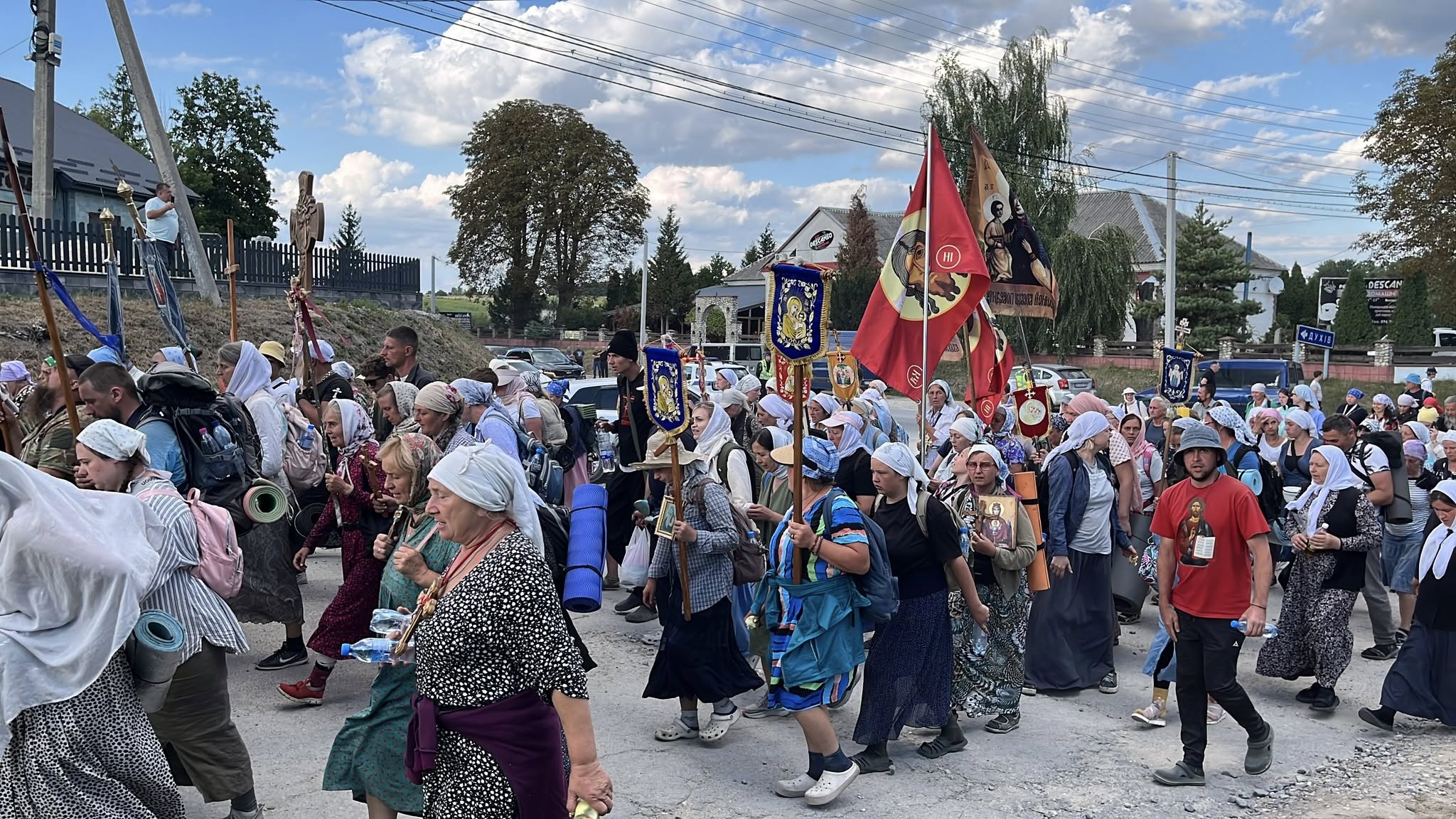
It is one of the oldest images in Christianity, with the earliest references to it dating back to the fourth century. The image of Christ on a dark red cloth is a traditional Orthodox processional banner carried in religious processions from Greece to Alaska. It was carried in Pochaiv long before either the “DPR” or the modern Russian Federation existed.
The UOJ addressed this substitution several years ago when the same narrative was first promoted.
The logic of the accusation runs roughly like this: militants of the “DPR” used an image of Christ; therefore the image of Christ belongs to the militants of the “DPR.”
By that logic, any Christian symbol could be declared hostile – all you would need is a photograph of some bad person holding it. The cross has been used in the symbolism of all kinds of villains over the past two thousand years, which tells us precisely nothing about the cross itself.
But this is not even about theology or the history of iconography. It is about proportions.
Think about it: 40,000 people arrived in Pochaiv, and instead of discussing what that means, we are being invited to debate a handful of banners in a column five kilometers long.
That is simply a pathetic attempt to divert attention – nothing more.
What the authorities should understand
A state that regards the UOC as a problem now stands at a crossroads.
The first path is to continue as before. The resources are there: courts, police, prosecutors, local administrations, legislation, commissions, expert reviews. Those resources can be used in an attempt to seize the remaining churches, liquidate the legal entities of individual communities, and imprison a certain number of priests.
Is that technically possible? Yes.
But what will the result be?
The Church will go underground. Services will be held in homes. Hundreds of small, invisible communities will emerge in place of large parishes. And the 40,000 people who today walk to Pochaiv praying for peace in Ukraine will turn into 4 million people with serious questions for their own state.
The state must understand that repression against believers does not destroy faith – but it is very effective at destroying loyalty. A person can be deprived of a church, but cannot then be forced to love those who took that church away.
And a country fighting an extremely difficult war can hardly afford the luxury of creating millions of aggrieved citizens within its own borders.
The second path is less dramatic. It consists of acknowledging the obvious: the people walking to Pochaiv are citizens of Ukraine. Their children are fighting. Their villages feed the country. Their parishes collect aid for the front.
They have the right to pray as they believe is right, and that right is written into the same Constitution that people are defending on the front line.
That is precisely why a struggle against the Church always becomes a struggle against one’s own people.
Simply because the Church is the people.