
"De-Moscowizing" for the sake of unity: how Shevchuk unites Ukrainians
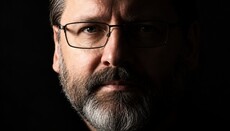
The head of the UGCC assures that internal division threatens the country's existence, while simultaneously calling to fight against the "wrong" ones. Is this cognitive dissonance or something more?
The head of the UGCC warns that internal division threatens the existence of Ukraine, while simultaneously calling to fight against the "wrong" ones. Is this cognitive dissonance or something more?
At the end of August and beginning of September 2026, the head of the UGCC Sviatoslav Shevchuk spoke in detail twice about the unity of Ukrainians.
On August 27, an episode of "Live Interview" was released under the title "Unity is a condition for survival!". Shevchuk's interlocutor was Yuriy Kliufas, president of the Ukrainian-Canadian television channel Kontakt TV.
A week later, on September 3, the resource Left Bank published a lengthy interview that Shevchuk gave to journalist Natalia Lebed: "Russia will do everything to make Ukrainians consider their victory a defeat."
In both conversations, Shevchuk repeats the same idea: internal confrontation today is just as dangerous for Ukraine as the external enemy.
"Not to wage war against Ukrainians"
In his conversation with Yuriy Kliufas, Shevchuk directly links unity with the existence of the state: "A threat to our statehood is not only external armed aggression, daily air attacks on our cities and villages, but also <…> attempts to set Ukrainians against each other. Therefore, for us, unity <…> is a condition for the preservation of our state and our people today."
Shevchuk then recalls Metropolitan Andriy Sheptytsky's message "How to build a home?" and warns of "otamanshchyna" (warlordism): "Today, the lack of unity in Ukrainian society can become a serious internal reason that, unfortunately, is capable of leading us down that erroneous path which, unfortunately, Ukrainian leaders of the past followed, which led to the loss of Ukrainian statehood."
Shevchuk also speaks of diversity: "Unity does not mean that everyone must think the same way <…> The unity in question is always unity in diversity <…> By listening to the opinion of even my opponent, I can see reality from a different angle. And let those different thoughts, different positions not divide us, but on the contrary – mutually enrich us."
In the LB interview, this formula sounds even more definitive: "The task of church leaders is to educate our people in the ability to unite. We need unity in order to overcome our internal troubles. However, unity does not mean that we must all support one political party, that we must all think the same way. Some think that unity means the absence of criticism. No. A democratic society needs free discussion."
Shevchuk then utters what is, in our view, the most important phrase:
"Ukrainian society must also do one more thing, namely not to project its pain and the trauma of war, as well as hatred of enemies, inward upon ourselves. That is, not to wage war against Ukrainians."
The thought is perfectly clear: Ukrainians can be different, criticize the authorities, argue among themselves, belong to different groups. The main thing is not to turn an internal opponent into an enemy. This is a call one can wholeheartedly endorse!
But let us look at how this principle works when Shevchuk speaks not about abstract Ukrainians, but about specific social groups.
"De-Moscowizing" souls and other ways of achieving "unity"
In the same LB interview, the journalist asks Shevchuk whether it was a mistake on the part of the state not to have "liquidated" the UOC immediately after the start of the full-scale invasion.
Shevchuk replies: "I think a certain weakness of ours was that we began talking about liquidating some Church at all. That is not quite right. What needs to be discussed is protecting the feelings of believers from instrumentalization by aggressor states."
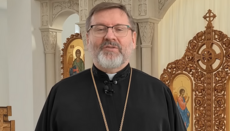
He continues: "What do we need to do now? De-Russify and, I would say, "de-Moscowize" the conscience and souls of many Ukrainians, and to do this one must act on very different levels and dimensions."
This is no longer a conversation about spies, collaborators, or people who have committed a specific crime. It concerns the consciousness, conscience, and religious identity of citizens. It turns out to be a specific "unity in diversity": a Ukrainian is allowed to be different but only until Shevchuk deems it necessary to "de-Moscowize" him. Is that right?
And furthermore: how does the head of the UGCC intend to measure the "Moscowness" of human souls? And by what methods does he intend to "de-Moscowize" them?
The next phrase from Shevchuk in the same interview is no less telling: "I remember how, after the law you mentioned, it was precisely we, religious leaders, who had to explain to the whole world that freedom of conscience was in no way being curtailed in Ukraine. That religious freedom was not restricted."
This statement directly contradicts the facts. The state passed a law effectively aimed at banning the largest denomination in the country. A court case is underway regarding the ban of the Kyiv Metropolis. Hundreds of churches are being forcibly taken from believers, hundreds of UOC priests are being forcibly mobilized and sent to the front, even though the canons forbid them from taking up arms. An atmosphere of hatred and groundless accusations has been created around the UOC. And this is called freedom of conscience?!
On July 15, 2026, at a meeting with a delegation from the World Council of Churches, Shevchuk asserted the same thing: "Be assured: the state law… is not directed against any one particular Church."
However, the World Council of Churches itself, even after the law was passed in August 2024, expressed deep concern about the possibility of "unjustified collective punishment of an entire religious community" and the risk of undermining social cohesion.
That is, Shevchuk was persuading representatives of an organization that had publicly stated its concern about precisely this matter two years earlier of the opposite.
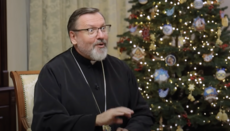
Earlier, in December 2024, in an interview with RBC-Ukraine, Shevchuk spoke about Orthodox communities of Ukrainians being formed in Europe: "To create from our emigrants a protest potential that will then protest against the policy of their own state."
He provided no evidence for his words, of course. But what matters is something else: in some interviews Shevchuk says that democracy needs criticism and different opinions, while in others he presents protest against state policy as part of a scheme by "pro-Russian oligarchs".
Another example of double standards. In the September LB interview, Shevchuk speaks about mobilization: "We do not want to condemn anyone a priori, because there are very many different cases and different reasons for such actions, but we support the Armed Forces of Ukraine and constantly explain that evading mobilization is a failure to fulfill one's civic duty."
But back in the summer of 2024, an accidentally switched-on microphone broadcast his conversation with Oleksandr Drabynko before a service at the UGCC Patriarchal Cathedral. The conversation concerned workers who were installing an iconostasis in the church. Shevchuk says: "It's difficult with these craftsmen. You know, everyone is being mobilized." Drabynko replies that the workers are hiding. To which Shevchuk admits: "We're even hiding them here with us a little. They live here and eat here."
So on the one hand, the head of the UGCC calls draft evasion a failure to fulfill one's civic duty, while on the other hand he hides draft evaders he needs. At least, that is what follows from his own words.
On September 2, 2026, Shevchuk met with Olga Dukhnich, head of the Demography and Migration program at the Frontier Institute, and the institute’s senior analyst, Roksolana Avramenko. The discussion focused on the demographic crisis, migration, and the future of the Ukrainian people.
At this meeting, the head of the UGCC spoke out in favor of integrating migrants into Ukrainian society and stated that Ukraine is building a new type of political nation: not "only for ethnic Ukrainians" but one that welcomes all who are ready to build the Ukrainian state.
We will not dwell on the fact that the experience of integrating migrants in European countries that have been accepting them en masse in recent decades can hardly be called successful. What is more telling is something else. To address the demographic problem, Shevchuk proposes attracting migrants – people of a different culture, religion, and mentality. Yet he proposes "de-Russifying" and "de-Moscowizing" millions of Ukrainians who are members of the UOC (after all, these were the people the journalist was asking about) at the level of their "conscience and soul." What should be done with them if they do not want to be "de-Moscowized"? Expel them from the country? Strip them of their rights? Declare them enemies of the people?
Conclusion: when "unity" begins to divide
In his interviews, Shevchuk described very precisely the danger Ukraine faces. He said that the war has wounded society, that its burden is distributed unevenly, that the accumulated pain can be turned against one's own people, that Ukrainians may begin to "wage war against one another."
But his own rhetoric does not lessen this threat; rather, it intensifies it. When some Ukrainians are told that their souls should be “de-Moscowized,” others are suspected of creating “protest potential” abroad, and still others are accused of failing to fulfill their civic duty – does this not incite discord and enmity in society?
It turns out that "unity" according to Shevchuk does not mean the right of different people to remain part of one country and one people, but rather the acceptance of the position he considers correct. The head of the UGCC speaks of unity while simultaneously forming an image of "wrong" Ukrainians. Moreover, this "wrongness" in his view grows precisely from a religious foundation.
In his interview, Shevchuk referred to Sheptytsky. Sheptytsky is, of course, a complex figure. But it would be useful to read his words not in Shevchuk's interpretation, but in full. They expose Shevchuk better than any commentary.
Here is a passage from Metropolitan Andriy Sheptytsky's message "How to build a home?" ('Як будувати рідну хату?', December 1941):
"In the soul of a Ukrainian there is a deep and strong will to have one's own state, but alongside this will there may exist an equally strong and deep will that this state be exactly as a party, clique, group, or even a single individual wishes to see it.
For how else can one explain this fatal division among themselves, these disputes, quarrels, squabbles, this partisanship that ruins every national cause?! How can one explain the psychology of so many ardent patriots whose activity has a clearly destructive character?!
This will become partly understandable when we see whether Ukraine can, if not unite on a religious basis, then at least renounce the purely Muscovite and even Bolshevik intolerance by which one begins to hate one's own brother merely because in matters of religion he thinks differently from us.
Intolerance toward those who think differently in matters of faith… is found among us, unfortunately, so frequently that one may seriously fear for the future of Ukraine; religious discord will not only fail to soften national strife, but may perhaps make it even more painful and deep."
Thus, "Muscovite intolerance", according to Sheptytsky, is hatred of a brother for thinking differently in matters of faith. It is precisely this that is being "instilled" today by those who call to "de-Moscowize" souls.