
What will happen to Christianity when it stops being the bulwark of civilization?
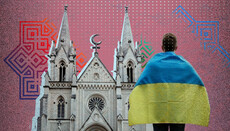
It is commonly believed that for fifteen centuries Christianity has been the bulwark and backbone of Western civilization. Yet in recent decades that backbone has begun to fracture. On the one hand, European countries are undergoing a gradual replacement of the native population by people belonging to other religions. On the other, social processes are being set in motion that work against Christian communities. And on a third front, the persecution of Christians is ignored or hushed up in the highest corridors of power.
In recent years, UN reports have regularly recorded large-scale violations of freedom of religion in Ukraine. This topic also surfaces periodically in international media. For example, in the fall of 2023, an interview by American journalist Tucker Carlson with Robert Amsterdam, the attorney defending the UOC, drew more than 100 million views in its first three days alone.
In December 2025, U.S. congressmen met with representatives of the Orthodox Church in America on the issue of persecution of the UOC. Statements were made afterward. Yet not a single Western government told the Ukrainian authorities that persecuting Christians is unacceptable. Western democracies, which so love to lecture the world about human rights, fall eloquently silent and avert their eyes from the outrageous trampling of religious freedom in the very heart of Europe.
Why? Why do they continue to applaud V. Zelensky while failing to notice his anti-church policy?
The answer is simple – because right now it is profitable. Politically, militarily, and in other respects.
But let us recall how, in 2018, American officials pressed for the creation of the OCU and proclaimed to the whole world that the right to freedom of conscience of members of the UOC-KP and the UAOC must be respected – even though no one was infringing on that freedom. For example, on the eve of the OCU’s creation in the fall of 2018, U.S. State Department spokesperson Heather Nauert declared that the United States “strongly supports religious freedom, including the freedom of members of groups to govern their religion according to their beliefs and to practice their faith freely without government interference.”
Why were such statements heard then, but are not heard now? Because today it is unprofitable.
The situation in Syria
The situation in Syria is even more revealing. There, the cynical attitude of Western democracies toward the persecution of Christians is displayed with still greater clarity. Before the civil war began in 2011, Christians made up more than 5 percent of Syria’s population. Now – less than 3 percent. Over that period, at least 1,200 Christians were killed, and more than 450,000 were forced to leave their homes. Hundreds of Christian churches and chapels were destroyed. Christian neighborhoods in Damascus, Aleppo, and other cities were repeatedly subjected to targeted shelling. The latest example – the massacre in Tartus and Latakia.
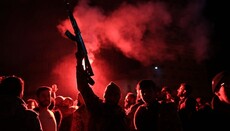
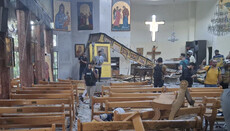
In December 2024, Bashar al-Assad’s regime was overthrown, and power in Syria was seized by the group Hay’at Tahrir al-Sham, led by Emir Ahmed al-Sharaa. In many countries this group is recognized as terrorist, and the United States had offered a reward of $10 million for al-Sharaa. A few months later, Syrian security forces in Latakia province killed hundreds of civilians, a significant portion of whom were Christians. According to representatives of the Antiochian Church, the attackers publicly desecrated Christian churches and icons.
On March 8, 2025, the heads of the Antiochian Orthodox Church, the Syriac Jacobite Church, and the Melkite Catholic Church issued a statement condemning the “mass killings of innocent civilians” and called for an immediate halt to “horrific actions that contradict all human and moral values.”
And a few months after that, the former Al-Qaeda terrorist al-Sharaa was received at the White House by U.S. President Donald Trump, who praised him for doing well in his duties. Not a word was said about the persecution of Christians in Syria.
Nor was it only the United States. Literally a couple of months after the massacre in Latakia – for which Syria’s authorities must bear direct responsibility – the European Union lifted all economic sanctions against that country.
Double standards
Perhaps Western countries are not interested in the right to freedom of conscience, or human rights in general? Not at all. They are very interested – but only when it is profitable. When Western democracies in 2011 demanded that Bashar al-Assad resign (“Assad must go”), their central official accusation was precisely human rights violations – and specifically the violation of freedom of conscience. The new authorities in Syria violate this right on a far greater scale, yet no complaints are made against them.
The European Union will provide Syria with $722 million for post-war reconstruction, bilateral support, and humanitarian aid in 2026–2027. And those funds could have been offered only on the condition that the rights of persecuted Christians be respected. But we see no such conditions at all.
Where does this double standard come from? A Syrian human rights advocate, Metin Rawi, explains it this way:
“In practice, economic deals, energy projects, military agreements, and strategic partnerships carry far more weight than human rights. And minority rights are always sacrificed first. Western powers also fear speaking openly about religiously motivated extremism. They do not want to ‘offend’ partners they need for economic or geopolitical interests.”
Yet when political or other interests require removing the leader of some state, violations of freedom of conscience are quickly placed on the list of charges against him.
Thus Christianity is sacrificed to mercenary interests, turned into small change in a vast geopolitical game. Where might this tactic lead in the end?
Despite secularization, Christianity still remains the foundation of Western civilization. However, the policy of unchecked assimilation of Muslim migrants gradually erodes that foundation – and if nothing changes, Europe’s Christians may face a kind of Syria within their own home. Metin Rawi warns bluntly: “If Europe continues down this path, European Christians will soon face the same threats.” The only question is timing – when exactly it will happen.
To Ukrainians, such problems seem distant – but only at first glance. Over the years of independence, the country’s population has fallen by more than half. A demographic catastrophe and the rapid dying-out of the nation (deaths nearly triple births) will inevitably lead to large-scale importation of labor – something officials are already speaking about. After the war, Ukraine will face a wave of migrants from poor countries. Most of them will be Muslims.
We are used to thinking of our country as Orthodox, but historical logic suggests that within the coming generations the ethnic and religious composition of Ukraine’s population may change fundamentally.
At present, such prospects appear catastrophic. But should we mourn the inevitable loss of Christianity’s “state-forming” role in the country? Did that role help the salvation and spiritual growth of each member of the Church?
Christ gave His apostles the commandment: “Go therefore and make disciples of all nations, baptizing them in the name of the Father and of the Son and of the Holy Spirit, teaching them to observe all that I have commanded you; and behold, I am with you always, to the end of the age. Amen” (Matthew 28:19–20). But over the last two thousand years, local Churches have taken on many other functions that Christ never spoke about – becoming pillars of statehood, the basis of national culture, influential social forces, and so on. Did all of this help the work of saving people?
We have built many churches – but how many people in “Orthodox” Ukraine actually attend them? Why do churches empty out after being transferred to the “state church”? There are no positive answers to these questions. As the political situation and the nation’s ethnic composition change, all pseudo-Orthodox “patriotic” organizations will die out on their own – those in which the center is not the Savior, but a national idea, complete with state symbols and coats of arms displayed on iconostases.
There may not remain very many living church communities. But those that do will be Christ’s – those who carry the Church’s original evangelical mission in the world.