
The Patriarch of dissent and unity: Orthodox world bids farewell to Ilia II
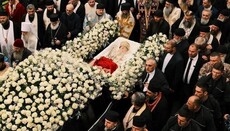
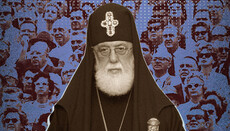
With the deepest sorrow, yet also with Paschal hope, the Orthodox Church has taken leave of one of the most remarkable primates of the modern age – His Holiness Ilia II, Catholicos-Patriarch of All Georgia.
The Patriarch’s foundational contribution to the life of the Church and to the Georgian people can scarcely be overstated. The presence of hundreds of thousands of faithful, prayerfully waiting for the chance to venerate his relics and pay tribute to his memory, bears eloquent witness to that truth.
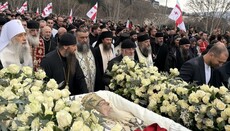
The presence of representatives of all the Local Orthodox Churches, and especially of the primates themselves – Ecumenical Patriarch Bartholomew, Bulgarian Patriarch Daniil, Archbishop Sawa of Poland, Archbishop Rastislav of the Czech Lands and Slovakia, and Archbishop John of Albania – testified to the pan-Orthodox authority and recognition Patriarch Ilia commanded, as well as to his immense contribution to the unity of the Universal Orthodox Church.
The Patriarch of Alexandria was represented by Metropolitan Theophylaktos of Caesarea, the Patriarch of Moscow by Metropolitan Veniamin of Minsk and Exarch of All Belarus, the Patriarch of Antioch by Metropolitan Niphon of Philippopolis, the Patriarch of Jerusalem by Metropolitan Nektarios of Anthedon, Patriarchal Exarch in Constantinople, the Patriarch of Romania by Archbishop Ioan of Timișoara, the Patriarch of Serbia by Metropolitan Metodije of Budimlja and Nikšić, the Church of Cyprus by Metropolitan Isaiah of Tamassos, and Archbishop Ieronymos of Athens by Metropolitan Gabriel of Nea Ionia.
The presence of the Ecumenical Patriarch is especially significant when one recalls that, under the late Patriarch Ilia, the Georgian Church did not accept – and indeed openly opposed – a number of key decisions of the Ecumenical Patriarchate and of Patriarch Bartholomew personally. Namely:
a) The withdrawal from the World Council of Churches in May 1997, undertaken at the insistence of clergy, many monastic brotherhoods, and the faithful, became a resounding message – an Orthodox witness before the community of the Local Orthodox Churches. A year later, the Bulgarian Church followed Georgia’s example.
b) One cannot fail to mention the way the late Patriarch Ilia received Pope Francis – it may well be called an exemplary illustration of how an Orthodox primate who honors his Church and his episcopal dignity can receive the Pope without slighting ecclesiastical Tradition or scandalizing the faithful.
c) Equally significant was the participation of representatives of the Georgian Church in the pre-Council pan-Orthodox consultations preparing the Council of Crete. As the minutes of those pre-Council commissions and meetings make clear, the Georgian hierarchs consistently defended the Church’s Tradition; particularly memorable were their sharp theological exchanges with the late chairman. It is telling that the Georgian Church did not sign the pre-Council document on marriage, and that, following the Georgian delegation’s insistent demands at the final pre-Council meeting, draft texts being quietly advanced toward the Council – without the knowledge not only of the faithful, but even of the hierarchies of the Local Churches – were finally made public. That disclosure provoked a wave of protest throughout the Orthodox world, especially regarding the document “Relations of the Orthodox Church with the Rest of the Christian World.”
d) In the end, the Georgian Church did not take part in the Council of Crete at all, and in its Synodal decision of December 22, 2016, it declared that the decisions and documents of the Cretan Council were not binding upon the Church, that they required correction or complete replacement, and that the Church’s theologians and clergy should study them and articulate their positions and concerns.
e) It should also be noted that the Georgian Church voiced numerous reservations regarding key articles of the Chieti document (2017), produced within the framework of the official theological dialogue between the Orthodox Church and Rome, particularly on the question of the primacy of the Bishop of Rome in the first millennium.
f) Finally, the Georgian Church also expressed disagreement with Ecumenical Patriarch Bartholomew’s granting of autocephaly to the Ukrainian schismatics and, to this day, has not recognized Epifaniy as the head of an autocephalous church.
And yet, despite the late Patriarch Ilia’s disagreement with these momentous decisions of the Phanar, his person and his authority drew the Ecumenical Patriarch to Tbilisi – to preside over the funeral service.
“Keep and preserve with reverence the counsels and teachings of your father,” Patriarch Bartholomew said in his funeral oration, addressing the Georgian people. May that appeal be heard by all Orthodox Christians – clergy and laity alike.