
Mount Athos just minutes away from a traffic jam on Stolychne Highway
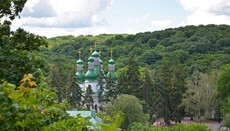
The minibus jerks habitually in the sweltering traffic jam on Stolychne Highway. The air conditioner gave up long ago and just circulates warm air through the cabin, someone nearby sighs heavily and irritably. You get off at the "Kytaiv" stop, turn from the busy highway into the depths of the private sector – and at first, nothing particularly special seems to happen. Just asphalt, dusty fences, the rumble of heavy vehicles still noticeably hits your back.
But as soon as you walk a little further along the old alley, past the cascade of ponds, the centuries-old trees close overhead in a dense green vault. The sound of the highway cuts off like a knife. In literally ten minutes you fall out of the frantic, neurotic rhythm of the metropolis and plunge into absolute silence.
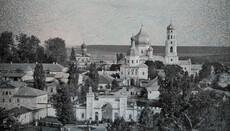
The switched-off metropolis
The Holosiiv district with its glass high-rises, shopping centers and continuous bustle remained somewhere in another universe. Here, in the Kytaiv ravine, not only the sounds but the very air itself is completely different. You do not simply breathe this air — you drink it like cold well water.
You walk along the path, a branch crunches under your feet, and this sound here seems louder than the roar of a car engine beyond the forest perimeter. You feel the muscle tension subside. That very anxiety with which we all now wake up in the mornings and fall asleep late at night, you seem to take off your shoulders and leave in the parking lot at the entrance to the monastery. The forest takes it away completely.
An elder who turned out to be a woman
Near the northern wall of the small Holy Trinity Church there is an inconspicuous place for which people actually come here. Under the veil rest the relics of the Venerable Dosithea. If a series were made today based on her real biography, film critics would surely be outraged, saying that the screenwriter hopelessly went too far and such things don't happen in life.
The beginning of the 18th century. A girl from a very noble and wealthy noble family, the Tiapkins, suddenly realizes that secular life with all its balls and intrigues is absolutely alien to her. She runs away from her parents' home. She cuts her own hair, dresses in peasant men's clothing and goes wandering through monasteries.
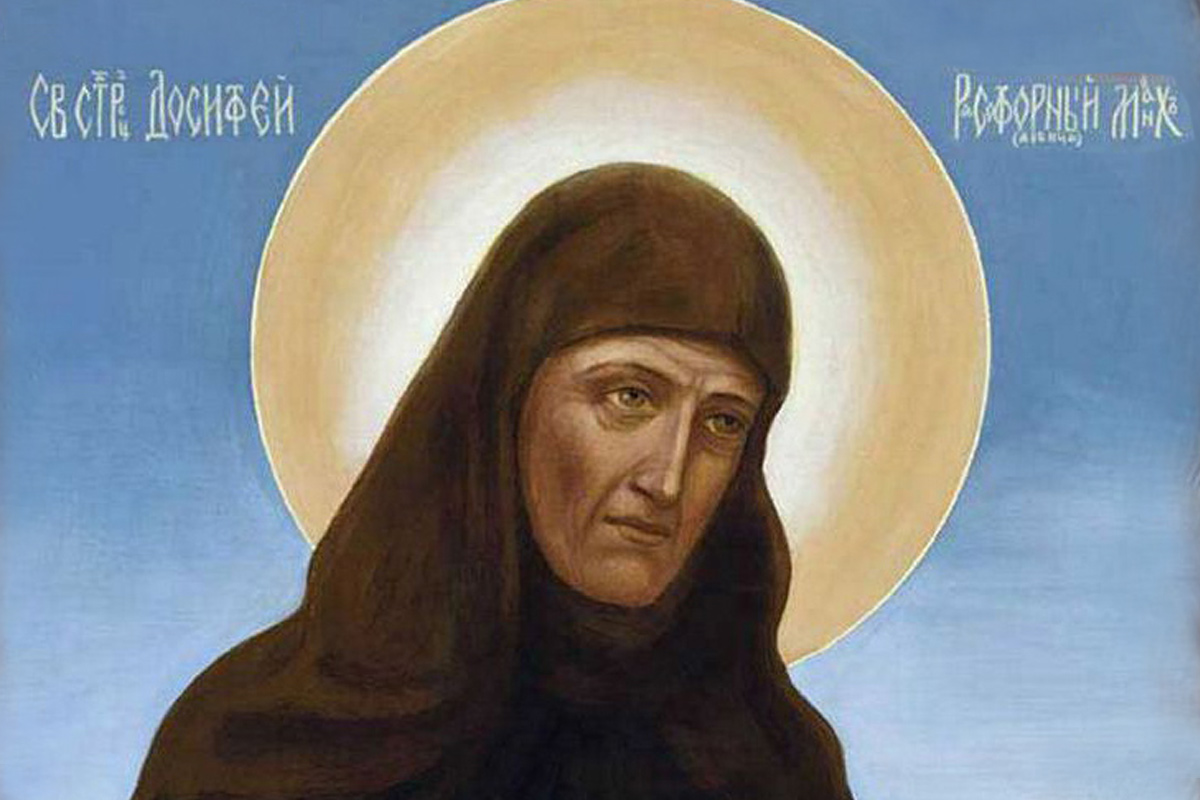
Years of the harshest fasting, sleeping under the open sky, cold and wind do their work – her face becomes rough, her voice becomes hoarse and breaks.
No one in the Lavra even suspects that the thin, emaciated novice Dositheos is a woman.
Eventually she comes here, to Kytai Hill, and lives for almost forty years in a damp cave carved into limestone. How it was possible to survive in this stone sack in winter, when dampness penetrates to the bone even in hot July, is a mystery that has no medical explanation.
Crowds of people of all socail classes came to Elder Dositheos. In 1744, even Empress Elizabeth Petrovna came here. The brilliant sovereign, accustomed to the extraordinary luxury of palaces, stood before an earthen cell, respectfully listening to the hermit’s advice. She left the elder a purse tightly stuffed with gold, which he immediately distributed among the local poor.
And it was here in 1776 that young merchant's son Prokhor Moshnin walked on foot to ask how he should live further. The elder from the cave blessed him to go struggle in distant Sarov. Thus from a damp Kyiv burrow emerged a man whom the whole world would later know as the Venerable Seraphim of Sarov.
And Dosithea's incredible secret was revealed only after her death. A tradition has been preserved of how her own sister, who came to Kyiv and spoke for a long time with the elder through the tiny cave window, did not recognize the runaway Daria in him. What inhuman willpower was needed to look at one's own blood and not betray oneself with a sound or gesture, so as not to break the vow! She recognized her sister only years later – from the posthumous portrait on the tombstone.
Psalter in an unusual performance
In the 19th century, this same forest remembered another remarkable person – Blessed Theophilus, a fool for Christ. A scene often witnessed by the residents of Kyiv was entirely surreal: through the dignified, provincial city of Kyiv, a makeshift, battered cart would slowly pass. In it sat a monk, but he sat facing backward, with his legs hanging down. In front of him was a small wooden lectern, on which an open Psalter lay.
1.jpeg)
The cart is pulled by an old bullock which, without any driver, knows by heart the route from the gates of the Kyiv Caves Lavra to the Kytaiv ponds. Passers-by stop; some laugh, others tap their foreheads in disbelief. The church authorities, embarrassed by the appearance of the monastery, regularly try to hide the strange holy fool somewhere out of sight, so that he does not disturb the respectable and wealthy public.
And he sits backwards, paying no attention to the mud flying from under the wheels, reads psalms and sees the future decades ahead. Foolishness is generally a surgical instrument with which saints open up our hypocrisy. In this forest ravine, the rigid rules of the "groomed" city simply stop working, giving way to a completely different logic.
The hill makes you bow
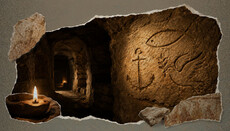
But the main reason why people climb the steep steps to the top of the hill today is the ancient caves themselves. The descent there is narrow, dark and uncomfortable. If you are at least of average height, you will have to bend down strongly, and in some places – fold almost in half. The cave hill does not let people with proud office posture pass, it forces you to bow to every meter of this space.
You walk along a narrow clay corridor, touch the cold walls that hundreds of years ago were scraped by the hands of people seeking salvation here, and feel the scale of what is happening. Right above your head, through the limestone vault, powerful roots of old trees from the forest above break through in places. Above you are meters of heavy, damp earth.
And here any connection with the outside world finally dies.
No bars on the smartphone screen, no mobile internet, not a single push notification. A thick geological shield completely blocks any waves. You have been forcibly disconnected from the news feed, harshly pulled out of the anxious information matrix. In this primordial darkness, only the trembling light of a wax candle, the smell of incense and the sound of your breathing remain.
Line of internal defense
The city advances on these places mercilessly. It has covered the ravine with concrete new buildings, squeezed it in the grip of noisy highways, tried to strangle it with exhaust fumes but has never broken through inside.
When you climb the steps from the cave back to the light, the city crashes down on you with the same, relentless force. Queues, traffic jams, car horns, wailing sirens – everything remains in its place. The world outside has not become softer. But you yourself have changed.
The spiritual grandson of the Kytaiv eldress, Seraphim of Sarov, said great, very precise words: "Acquire a peaceful spirit, and thousands around you will be saved." People do not retreat to such remote places out of contempt or hatred for others, nor to cowardly hide from harsh reality. They descend into such caves in order to accumulate that very inner peace and bring it back to the streets—back to where people every day are quite literally suffocating from fear and uncertainty.
Now, when news strikes with full force, and night alarms tear nerves to pieces, the forest silence twenty minutes from the center is our line of internal defense.
The God to whom people pray in the cold Kytaiv caves is the very same God who stands beside us on a cold stairwell during yet another missile strike. It is just that there, deep underground, far from car horns and glowing screens, it becomes a little easier for us to hear His answer.