
The right to eternal rest

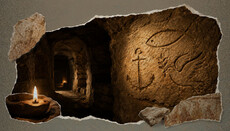
On the cold stone of the tombs in the Catacombs of St. Callixtus, one’s fingers trace uneven grooves. Someone hastily scratched a short Latin inscription here with an untrained hand: “Agape, you shall live in God. In peace. Laid here four days before the Kalends of January.” Beside it is a crude drawing of a small olive branch and the outline of a ship’s anchor.

This modest epitaph was dedicated to an ordinary slave woman who lived in the third century. During her lifetime, she had no civil rights, no family name, and no home of her own – the Roman Empire regarded her merely as animate property and a source of unpaid labor. Yet standing beside her grave, we understand that the Christian community preserved her name for eternity. That small marble slab became a manifesto of one of the greatest humanitarian revolutions in human history. Christianity transformed burial itself, replacing the pagans’ nameless mass pits and giving every poor person the right to eternal remembrance.
The bottomless pits of the Esquiline
To grasp the scale of this transformation, we must leave the cool underground corridors in our imagination and return to the surface of imperial Rome in the age of the Caesars. The gilded palaces of the Palatine and the monumental triumphal arches concealed the sordid underside of the imperial capital. The ancient world imposed a strict economic threshold: only patricians, wealthy freedmen, and high-ranking officials could afford an expensive stone monument listing military achievements and public titles. Death, meanwhile, mercilessly erased from history the names of millions of ordinary slaves, destitute foreigners, and urban laborers.
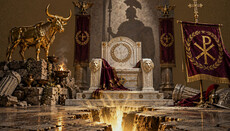
Excavations on the Esquiline Hill uncovered puticuli – enormous open shafts used for disposing of the poor. Every morning, city workers brought there the bodies of those who had died in cramped rooms in the Roman slums or in the marketplaces.
Bodies were thrown into these stone pits by the thousands, until human flesh merged into a nameless, rotting mass.
The Roman state regarded a dead pauper as an exhausted resource – a broken part of the machinery of government that had to be removed from the streets for reasons of sanitation.
The relatives of the dead had nowhere to go to mourn them, as though those people had never existed at all.
Rooms awaiting the dawn
The Christian community could not accept such disposal of the dead – and this was not merely a matter of compassion. Faith in the Incarnation changed everything. If the Creator Himself had taken on a human body, then the body was sacred. And if the Savior had promised the resurrection of all in the flesh, then a grave could not be treated as a refuse pit. Christians began purchasing private plots of land outside Rome and creating underground networks of catacombs – those of Priscilla, Callixtus, and Domitilla.
In place of common trenches, believers created a system of individual burial niches known as loculi. Every body – whether that of a noble Roman, a runaway slave, an impoverished widow, or a newborn child – was given a separate resting place in the wall.
No one was thrown into a common heap anymore – the body was washed with water, wrapped in clean linen, and carefully laid upon a stone bed.
During the same period, the Church abandoned the pagan term “necropolis,” meaning “city of the dead,” and introduced a new Greek word into common use – koimeterion. Its literal meaning is strikingly warm: “resting place” or “sleeping chamber.” Believers buried their loved ones as though laying them down to sleep until morning.
St. John Chrysostom left us an explanation of this new map of humanity’s journey: “For this reason the place itself is called a cemetery [a sleeping place], so that you may know that those who have died and are laid here are not dead, but sleep and rest. Before the coming of Christ, death was called death... But now... it is called rest and sleep.”
Secret signs of an eternal home
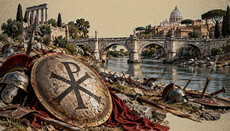
A Christian tombstone in the catacombs differed greatly from a secular Roman monument. There were no long lists of earthly honors, victories won in battle, or fortunes amassed. Instead, very different symbols were scratched onto the terracotta tiles sealing the niches or onto fragments of marble: an anchor – the ancient emblem of unsinkable Christian hope; the outline of a dove carrying an olive branch in its beak, symbolizing the reconciliation of the saved soul with its Creator; and the Chi-Rho – the monogram of the Savior’s name, serving as the seal of His eternal dominion over that place.
It was also important for the community to record the person’s name and the exact date of burial. Christians called this date the “birthday” – not the day of birth from the mother’s womb, but the day of passage into eternity.
Thus the grave became a home with an address from which the Lord would summon His servant on the day of the Second Coming.
Later, Blessed Augustine wrote about the Christian attitude toward the body of the deceased: “Care for burial, the arrangement of a tomb, and the splendor of a funeral are more a consolation for the living than a help to the dead. Yet it does not follow that the bodies of the dead should be neglected... especially the bodies of the righteous and faithful, which the Holy Spirit used as instruments and vessels for every good work.”
Today, amid the realities of wartime and the many fresh graves around us, this code from the catacombs sounds like a message addressed personally to us. The world tries to convince us that death is the absolute end, erasing a person from existence. Yet when we come to Christian cemeteries, we see simple wooden or stone crosses bearing plaques with a person’s name and the years of their life.
Every such grave marker is an inheritance from those ancient inscriptions in the Roman caves – a firm declaration by the community of the faithful: this person has not been forgotten. Their unique name, their earthly sorrows, their love, and their faithfulness are forever inscribed in the memory of the Living God.