
Scientists uncover foundations of church that hosted First Council of Nicaea
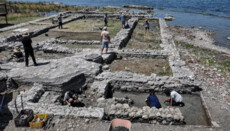
Archaeologists in the Turkish city of İznik have discovered the foundations of the church where the First Ecumenical Council was held in 325. Scholars identified the remains as the Church of St. Neophytos, confirming historical accounts that the council convened in a modest building, Heritage Daily reports.
The new findings indicate that the Basilica of the Holy Fathers was built directly over the ruins of the original church after the earthquake of 368.
Excavation director Professor Mustafa Şahin said the architectural features and flooring uncovered at the site point to the building described by the historian Eusebius of Caesarea. According to his writings, the council was held in a relatively modest church rather than a monumental structure.
During the 11th archaeological season, researchers from universities in Türkiye and Italy discovered a distinctive floor surface extending beyond the foundations of the later basilica.
Experts regard this as evidence that the larger church was built on the site of the earlier destroyed sanctuary rather than on a new plot of land. The Basilica of the Holy Fathers was constructed after 380 specifically to honor the bishops who took part in the council.
Small artifacts were also found at the excavation site, including a gold ring and a bronze thimble bearing images of a palm tree and a sword, dating from the Umayyad and Abbasid periods. Coins from the reigns of Emperors Valens and Valentinian I had previously been discovered there, confirming the date when the upper church was built.
The newly uncovered ruins represent the most compelling archaeological evidence to date of the precise location where this historic event took place. Research in the central nave is continuing in order to establish the building’s architectural appearance more conclusively.
As the UOJ previously reported, archaeologists discovered the biblical city of Bethsaida on the shore of the Sea of Galilee.