
Christianity begins where churches are seized
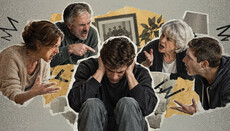
We sit in the kitchen long past midnight, the bluish glow of a smartphone screen illuminating our faces. We cannot bring ourselves to turn it off. News has come again: somewhere, the locks on a parish church have been cut; a congregation has been turned out into the street; yet another round of court reports has been filed. A deep sense of vulnerability rises within us, and we realize how long we had lived under the illusion of comfort. We imagined that church life meant warmth, the scent of good incense, a trained choir singing, and property documents safely locked away in the rector's safe. And when our churches begin to be taken from us, we find ourselves almost paralyzed.
The saint's counsel
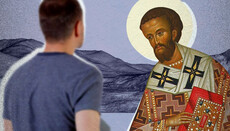
In the dim light of the room, let us turn our minds to one who walked a similar way of the cross. Let us travel to the fifth century and attempt to enter into dialogue with St. John Chrysostom.
– Your Eminence, we are afraid. We are losing our churches. The keys have been taken away, people are being driven out into the streets. Where are we to go now? It seems as though Christ has abandoned us, since He has allowed our enemies to seize our shrines.
From the corner where a vigil lamp barely flickers, we hear the voice of the Archbishop of Constantinople, hoarse from a long fever. He looks at us with his enormous, sunken eyes and replies without the slightest trace of the metropolitan grandeur:
– Let nothing of what is now happening trouble you, the saint says quietly, and we recognize the lines he once sent from remote exile to his grieving spiritual daughter Olympias. I see that a fierce storm is raging, that waves are rising, that the sea is surging up from its very depths… But I do not lose hope for better times, remembering the Helmsman, Who with a single gesture brings the turmoil to an end.
We are silent, struck by this calm strength. The holy father speaks these words not from a comfortable episcopal residence. In 404, he himself was driven by guards under a blazing sun and icy wind to the remote and rocky Cucusus, and then even further – to Comana, where he reposed. His see was taken from him, his status stripped away, his flock persecuted. Yet he did not yield to panic.
The damp gloom of abandoned baths instead of marble shine
– But how does one pray outside a church, Your Eminence, we ask, trying to find at least some earthly foothold. We have grown accustomed to thinking of the church as our spiritual home. If the cathedral has been seized by strangers, where are we to seek the Liturgy? How are we to live on if what we built over years has been taken from us?
St. John seems to sit down across from us at the rickety kitchen table. In his gaze one can see a deep understanding of our weakness.
– The Church is built by faithfulness, the great exile gently reminds us.
And suddenly we recall his spiritual children, whom their enemies contemptuously called Johannites. They too were driven out, from the magnificent Hagia Sophia and from all the marble-gleaming basilicas of the capital. They were stripped of their legal status and declared outlaws. And they did not bow before officials for the sake of preserving their comfort. They withdrew to the Baths of Constantius – old, abandoned public bathhouses.
And when the baths were sealed, they went out into the fields beyond the city gates. They stood in the mud under the pouring autumn rain, singing psalms in the open air, at risk of being caught in a sweep by imperial soldiers. The imperial officials would shake their heads in disbelief: why go out into a cold, open field when the city had warm, officially recognized churches with bishops approved by the authorities? But the saint’s spiritual children knew: Christ remained with them in that deserted field, not with those who had taken someone else’s houses of prayer.
We listen to the universal teacher, and we feel uneasy at the realization of our own softness and comfort. We, too, are infected by the same illusion that nearly destroyed the deaconess Olympias. She, the wealthiest aristocrat of Byzantium, had poured her immense fortune into church buildings, hospitals, and monasteries. And when her community was crushed and she herself was dragged from one interrogation to another, she fell into a deep depression.
– We feel betrayed, just as Olympias did, we confess to the saint. Why does the Lord permit this destruction? Why does He take from us what we loved so sincerely?
The fable of sharpened swords
The Archbishop of Constantinople bends closer, and the lamp’s faint glow reveals the parchment-like whiteness of his face. In his voice one hears the unconquerable freedom of a man whose most precious possession earthly power could never take from him.
– There is only one thing that is truly dreadful, only one genuine misfortune – sin, the holy father repeats, echoing his letters from the capital. Everything else is a tale: whether you speak of plots, hatred, deceit ... the loss of possessions, exile, or sharpened swords.
Indeed, all these registrations, property rights, and beautiful buildings of ours are like cardboard scenery in a theatre. While the peaceful performance continues, we imagine that the castle painted on canvas is real, solid, and eternal. But when the hurricane of history bursts into the hall, the cardboard grows sodden and flies away in the wind within seconds. And you are left face to face with calamity.
God removes these stage sets not because He is weaker than our persecutors. It is simply a painful but necessary surgery. We have grown too long in spiritual obesity amid outward prosperity, having begun to trust more in the goodwill of benefactors than in Christ. Comfort has made us slack.
We remain silent, afraid to admit that our spiritual life has become too dependent on earthly comfortsю We have grown accustomed to safety, approval, and warm parish tea gatherings. The loss of a church is like the agonizing process of having a cast removed. When a broken leg has healed, the cast must be broken off. Otherwise, the muscles will finally waste away and the person will never be able to walk again. Outward stability was such a cast. We relied on it for too long, forgetting how to place our trust in God. But without churches, Orthodoxy does not end – it only begins.
– Will our churches really not be given back to us? we ask with bitterness, still holding on to a childlike desire to return to our former life. Is this storm to last forever? Are we to pray in hidden corners until the end of our days?
When the Helmsman releases the wheel
His Eminence John looks at us with barely perceptible sadness. He does not feed us the cheap optimism so eagerly shared by today’s armchair preachers. He does not promise that tomorrow the authorities will come to their senses, the courts will return the property, and everything will go on as before.
– You cannot govern the course of events yourselves, Saint John says in the spirit of his letters to the sorrowful deaconess. Remember the One who stands at the helm. He overcomes the storm not by human skill. When the turmoil has reached its peak and the sailors have no resources left, then He works wonders.
Indeed, one should not wait for salvation by blindly hoping that political levers or international bodies will come into play. Our task is to remain faithful to Christ even when not a single square metre of church property remains beneath our feet. When the cardboard walls of stability collapse, the true, apostolic Church is born. It cannot be sealed shut, it cannot be stripped of legal status, and its keys cannot be taken away, because its foundation is loving hearts.
We listen to the great pastor, and the fear that only an hour ago seemed as heavy as lead begins slowly to settle to the bottom of the soul. We come to understand that Christianity stripped of its outward trappings is frightening in its uncertainty. But it is precisely there that the breath of freedom appears. We do not know how much longer this storm will last. Nor do we know the answers to many questions and perplexities. But we know for certain that God will never lose this battle.
St. John Chrysostom slowly rises; his figure begins to dissolve into the kitchen twilight. Before disappearing entirely, he speaks the words that once became his last breath in exile: "Glory to God for all things!"
Outside the window, the vast and troubled city still hums. But the fear of losing an outward space for prayer is gone. All that remains is a fragile hope and trust in the One Who holds the helm in the midst of every storm.