
A forgery at the foundation of Mohyla Academy

For centuries, historians have repeated an appealing story about a wealthy benefactor’s generous gift. Archival documents, however, paint a very different picture of what happened.
Dusty folders in state archives preserve secrets capable of shattering the myths found in school textbooks. Turn to older studies on the history of education in Kyiv, and a noble story unfolds before us. In distant 1615, a wealthy noblewoman, Yelyzaveta Vasylivna Hulevychivna, better known as Halshka Hulevychivna, donated her estate in Podil for an Orthodox monastery and a school open to children of all social classes. This appealing story appears in virtually every history textbook in the chapter on the founding of the Kyiv-Mohyla Academy.
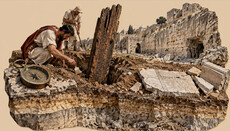
The problem is that the original of the famous deed of gift has not survived. Researchers have only a later copy – one containing numerous anachronisms, stylistic inconsistencies, and internal contradictions.

The real archival detective story begins when scholars take out their magnifying glasses and compare what was written in ink with the realities of the period. Familiar textbook narratives then begin to crumble, leaving researchers face to face with uncertainty where an ironclad historical fact once seemed to stand.
A forged gift on the archive shelves
Doubts about the document’s authenticity arose long ago. As early as the 19th century, researchers began publishing studies that raised provocative questions. Is the account of the academy’s female founder authentic? Or is it a skillful fabrication from a later century? Scholarly debate advanced slowly, encountering resistance from admirers of the pious benefactor Halshka.
Comparing the deed with other 17th-century charters reveals a curious discrepancy. The wording of the document bears a suspicious resemblance to the language of 18th-century legal practice. Some scholars openly describe it as a forgery concocted by monks to defend the monastery’s property rights against rival claims to its land. Monastic lawyers knew their way around legal documents and could create convenient precedents retroactively for litigation before the Crown tribunals.
The identity of the supposed donor herself is also shrouded in uncertainty. While studying documents from the period, specialists have found traces of another woman with a similar surname, prompting debate over a possible historical double.
The result is a paradox: the traditional account of the founding of a famous educational institution rests on a document whose authenticity has given serious historians grounds for skepticism.
Signatures on the yellowed pages of the Upys
Fortunately, the history of education in Kyiv does not rest entirely on one disputed document. There is reliable evidence that has withstood historical scrutiny. The archives preserve not only questionable copies but also authentic signatures of people who defended the Orthodox faith during a turbulent period of persecution by Uniates and Catholics.
The earliest surviving document is the so-called Upys – the official register of members of the Kyiv Brotherhood. The first signature on its yellowed pages is dated January 4, 1616. Fifteen clergymen and five laymen formally recorded the establishment of an organization dedicated to defending the faithful.
These people did not wait for favors from the king. They acted amid persecution, when the Orthodox population on the fringes of the Polish-Lithuanian Commonwealth was being pushed to the margins of public life. The existence of this register confirms that the community was already active long before the later legends emerged. Townspeople donated what little money they had, hired teachers, and defended Church property against unlawful seizure and appropriation.
Documents associated with Patriarch Theophanes IV of Jerusalem attest that a newly built Theophany Church already existed in Podil by 1620. The distinguished visitor personally stayed at the monastery for months, secretly consecrating bishops to restore the Orthodox hierarchy destroyed by royal prohibitions.
Hetman Petro Sahaidachnyi worked alongside the brotherhood as well. The military commander donated generously to the monastery and became its principal benefactor. His will helped provide the community with financial stability. The hetman’s saber and well-filled purse protected the scholars of Podil more effectively than any legal maneuvering.
A college born amid controversy
The controversy surrounding the deed of gift does not negate the central fact: the institutional continuity of the Kyiv school is reliably documented.
In the fall of 1632, Archimandrite Petro Mohyla took a decisive step. He merged the Theophany Brotherhood School with the educational institution at the Caves Monastery. The combined institution received the status of a college and was housed in buildings in Podil.
The future metropolitan possessed strategic thinking on a European scale. He understood the importance of high-quality education in resisting the intellectual pressure exerted by Jesuit colleges.
Petro Mohyla placed the school under his personal protection, giving it his rich library and real estate. Disputes over who had originally owned the land transferred to the educational institution ceased to concern its teachers. The school began operating at full strength, producing theologians, poets, and diplomats who would go on to defend the faith with pen and word.
Archival research continues. Professional historians will keep debating the authenticity of old documents and searching for traces of later alterations. But the actual educational endeavor begun by ordinary townspeople and supported by the hetman’s saber left a legacy that no academic controversy can erase.
Legends come and go, but institutions built through the labor of generations continue to shape the course of history.