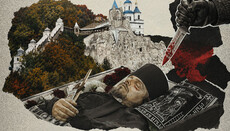

Why did no one come to Filaret's funeral?
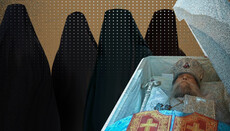
On March 20, 2026, Filaret Denysenko passed away – a man who can, without exaggeration, be called a key figure of Ukrainian Orthodoxy over the past three decades.
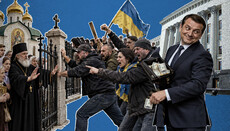
Already on March 22, he was buried in Kyiv. The President, the Speaker of the Verkhovna Rada, the Commander-in-Chief of the Armed Forces of Ukraine, and other officials came to bid farewell to the deceased.
However, among those present there was not a single representative of the Local Churches that called Filaret a canonical hierarch: neither Alexandrian, nor Cypriot, nor Greek, nor Constantinopolitan – the very one that "reinstated" Denysenko. Moreover, even the Ecumenical Patriarch's Exarch in Ukraine, Bishop Michael (Anishchenko) of Komana, who did not need to travel anywhere and could have walked from his residence, did not appear at the funeral service either.
This complete absence of representatives of other Churches is neither accidental nor a coincidence. It is an eloquent and, in our view, demonstrative act of ignoring. And it speaks for itself far louder than any statements about the “canonicity” of Dumenko’s structure.
What is Filaret Denysenko
Mykhailo Antonovych Denysenko (Filaret in monasticism) was born in 1929. He went through the entire Soviet church path: from a novice to Metropolitan of Kyiv and All Ukraine, Exarch of the Russian Orthodox Church. During the Soviet period, he was one of the key hierarchs of the Moscow Patriarchate, leading the Ukrainian Orthodox Church, which was part of it.
After the collapse of the USSR and the proclamation of Ukraine's independence, Filaret planned to become the new Patriarch of the Russian Orthodox Church. When that didn't work out, he increasingly sought autocephaly for the UOC. Not only because he quickly grasped the situation and understood: the new Ukrainian authorities needed a "national Church", but also for the sake of fulfilling a long-standing dream: to wear the patriarchal koukoulion.
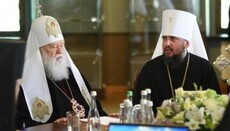
As a result, for almost three decades he remained the permanent "patriarch" of the UOC-KP. Let us recall that for schismatic acts he was first suspended from service, then defrocked, and finally excommunicated from the Church – this decision was recognized by all Local Churches.
Nevertheless, Filaret Denysenko became the main driving force of the process that led the Patriarchate of Constantinople to create the OCU in 2018-2019. He sought this recognition for decades, he organized meetings with the Constantinopolitan side, his structure – the Kyiv Patriarchate – became the basis for the emergence of the OCU, which received the Tomos from Constantinople. Without Filaret Denysenko, no OCU would simply exist.
After the creation of the OCU, Filaret received the strange title "Honorary Patriarch" in it. With this designation, his photograph has graced the official OCU website for almost seven years.
However, Denysenko very quickly entered into conflict with his protégé Epifaniy. The main reason: he was promised that he would head the new structure but he was deceived. Filaret began to say that the Tomos was obtained at the cost of diminishing the rights of the "Ukrainian Church." A number of his statements went against the official position of the OCU, which tried with all its might to present Filaret's statements as the words of a man who had almost lost his mind.
Even when he declared that he was not a hierarch of Dumenko's structure, even when he began to "ordain" his own "episcopate," the OCU pretended that nothing was happening and did not subject Filaret to any canonical penalties.
Nevertheless, his funeral was presented as a significant event – both for the OCU itself and for all of Ukraine. But not for the Orthodox world.
Constantinople's stance
To understand why the Patriarchate of Constantinople did not send even the most insignificant representative to Filaret's funeral, it is necessary to understand how the Phanar defined his canonical status.
For Constantinople, Filaret Denisenko was never officially a "patriarch." Representatives of the Phanar spoke directly about this. From their point of view, he was the "Metropolitan of Kyiv" – such status was fixed after the presentation of the Tomos. The Phanar, as a matter of principle, did not recognize his patriarchal dignity despite the fact that the OCU itself referred to him as an “Honorary Patriarch,” and despite his consistent efforts to obtain recognition as a patriarch.
There is an obvious contradiction: for the OCU, Filaret was the "Honorary Patriarch," for Constantinople – only a "metropolitan." But something else is more important. If we take into account that the Phanar recognizes the OCU as its "sister church" and actively supports its existence, then ignoring the funeral of a man whom the OCU itself considered its "Honorary Patriarch" looks at least like an unfriendly gesture.
The absence of the Phanar's Exarch in Ukraine – Michael (Anishchenko) – is particularly telling. The Exarch is the Phanar's permanent representative in the country; his presence at such an event would have been completely natural, if only for protocol reasons. Therefore, his absence looks like a real démarche. It cannot be explained by busyness or accidental coincidence.
What is behind this decision? There may be several answers, and they do not exclude each other.
First, ignoring Filaret's funeral may reflect Constantinople's position regarding his canonical status. If in the eyes of the Phanar he was only a former "metropolitan" (since Dumenko is now considered the acting one), then his death does not oblige special protocol.
Second, Constantinople could avoid any gestures that could be interpreted as recognition of the patriarchal dignity that Filaret attributed to himself. To come to the funeral of an "Honorary Patriarch" would mean indirectly agreeing with this title.
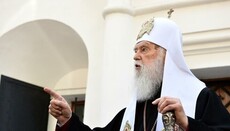
Third – and this is perhaps the most significant – such behavior corresponds to the general logic of the Phanar's attitude toward the OCU not as a full-fledged church subject, but as an instrument. The Tomos was issued, the political task was solved. The Patriarchate of Constantinople builds the further protocol of its relations with Dumenko's structure based on its own interests – and participation in the funeral of a Ukrainian church figure, even a significant one, was clearly not part of these interests.
In other words,
the absence of Constantinople's bishops – at least for protocol's sake – is an indicator of attitude not only toward Filaret personally but toward the OCU as a whole. This structure, apparently, does not deserve either genuine respect or even basic courtesy in the Phanar's eyes.
Churches that recognized the OCU
Besides Constantinople, the OCU was recognized by the Alexandrian, Cypriot, and Greek Orthodox Churches. None of them also sent their representatives to Filaret's funeral.
This circumstance deserves special attention, since here one can no longer appeal to canonical disagreements regarding Filaret's status itself. If the Church has recognized the OCU as a legitimate Orthodox Church, that means it de facto also recognizes its internal life, including showing respect for its honored hierarchs. Not attending the funeral of a man whom the OCU called its “Patriarch” demonstrates indifference not so much to Filaret personally but to the OCU itself.
At the same time, neither Alexandria, nor Cyprus, nor Greece faced obvious practical obstacles. Ukraine is not an isolated country; diplomatic and church contacts with it are maintained despite the war. The Greek Church, in particular, has repeatedly expressed support for Ukraine. What prevented sending at least one representative, even of low rank?
The answer, apparently, is one: recognition of the OCU for these Churches was a political, not an ecclesiological act. It was performed under pressure of circumstances and primarily under pressure from the Phanar. This recognition did not mean true inclusion of the OCU in the circle of Orthodox Churches as an equal member – only agreement with the position of Patriarch Bartholomew.
Denysenko's funeral exposed this problem with particular clarity.
What this means for the OCU
The combination of the facts described raises a fundamental question: what is the real ecclesiological status of the OCU in the eyes of those who recognized it?
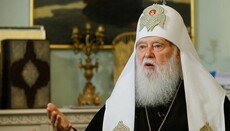
From a formal point of view, the OCU is a canonical Local Church that received the Tomos from Constantinople. But in reality, the situation looks different. Even those Churches that recognized it behave as if nothing stands behind this recognition. The absence of all of them at the funeral of Filaret Denysenko – a man who not only was a "hierarch" of the OCU, but actually created the conditions for its existence – speaks about this more clearly than any declarations.
The Constantinople Patriarchate used Filaret and the structures of the Kyiv Patriarchate as instruments to achieve its goals in the Ukrainian ecclesiastical field. When the Tomos was obtained, Filaret became politically inconvenient: he insisted too strongly on his “patriarchal” status and criticized too loudly the conditions under which the Tomos was granted. He went from being an asset to being a problem. And when he died, he was simply ignored: by either the Phanar or those who followed the Phanar.
This whole story confirms what many Orthodox theologians and church analysts warned about from the very beginning: the OCU creation was primarily a political project, not a true church reunification. The Patriarchate of Constantinople received a foothold in Ukraine, necessary for strengthening its claims to primacy in the Orthodox world. Ukraine received formal church confirmation of its independence from Moscow.
But the OCU never took a real place in the Orthodox family – neither de jure in the eyes of most Local Churches, nor de facto in the behavior of even those who recognized it. The funeral of Filaret Denysenko became just another – and perhaps the most vivid – confirmation of this.