
A trial without justice: Why Constantinople is losing the Church’s trust
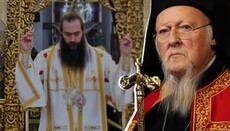
To briefly recall, in 2025 the Synod of the Church of Cyprus decided to remove Metropolitan Tychikos from governing the Paphos Eparchy. According to most experts, this decision was made without proper canonical investigation and without observing even the most basic judicial procedures prescribed by the sacred canons of the Church.
Finding himself in a situation where justice could not be restored at the local level, Metropolitan Tychikos exercised his lawful right – the right of appeal (τὸ ἔκκλητον). The ekkliton is an ancient canonical right of any bishop or cleric of a Local Orthodox Church to appeal a Synodal decision to the Ecumenical (Constantinopolitan) Patriarchate. This is not a mere legal technicality or bureaucratic formality. For centuries, the ekkliton has served as the highest court – a guarantee that a hierarch unjustly condemned would receive an impartial hearing, far from local political passions and personal conflicts.
For an ordinary Orthodox believer, the fate of a single Cypriot metropolitan might seem like an internal matter of one eparchy. That would be a mistake. The case of Metropolitan Tychikos is a revealing example of how the highest mechanisms of church justice function today.
Every believer should understand: the Church’s canons were not written to gather dust in archives, but to defend truth and justice. The right of appeal was granted to the See of Constantinople by the Ecumenical Councils not as a tool for asserting political influence or imposing its will on other Local Churches, but as a cross of service. It is an obligation – to be the final court of truth, where judgment is rendered not according to sympathies or political calculations, but solely according to the letter and spirit of the Holy Canons.
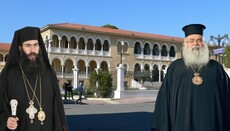
In this article, relying on the canons, official statements, and eyewitness testimony, we will examine in detail: what the right of appeal is, how it should be applied, and what in reality took place at the session of the Synod of the Ecumenical Patriarchate that considered the appeal of the Metropolitan of Paphos.
What is the right of appeal according to the sacred canons?
To grasp the essence of the problem, we must turn to the primary sources – the sacred canons of the Orthodox Church, formed over the first millennium of Christian history and remaining the unquestioned law for all Local Churches. The right of appeal (ekkliton) was not invented to serve anyone’s ambitions – it was established conciliarity by the Fathers of the Church as a necessary mechanism for maintaining order and protecting against arbitrariness at the local level.
Historically, the institution of appeal began to take shape as early as the Council of Sardica (343), which granted the right of appeal to the Bishop of Rome as the bishop of the ancient imperial capital. The key documents that prescribed this right for the See of Constantinople were the canons of the Fourth Ecumenical Council, held in Chalcedon in 451. With the rise of Constantinople as the New Rome, the Ecumenical Patriarch became the chief guardian of this right in the Christian East, and after the final division of the Churches in the eleventh century – the only one.
Of particular importance are Canons 9 and 17 of the Council of Chalcedon. Canon 9 states: “If a bishop or clergyman should have a difference with the metropolitan of the province, let him have recourse to the Exarch of the Diocese, or to the throne of the Imperial City of Constantinople, and there let it be tried.”
This canon clearly establishes the order of ecclesiastical justice. If a conflict arises between a cleric and a bishop, it is resolved at the level of the metropolis. But if the conflict involves the metropolitan himself – the head of a local church region – then the complaint may be directed either to the exarch (the head of a larger ecclesiastical district) or directly to the See of Constantinople.
Canon 17 of the same Council supplements and clarifies this norm in the context of territorial disputes: “And if any one be wronged by his metropolitan, let the matter be decided by the exarch of the diocese or by the throne of Constantinople, as aforesaid.”
These two canons are the cornerstone of the right of appeal. They show that the Fathers of the Council regarded the See of Constantinople as the highest judicial authority, capable of resolving disputes that could not be settled at the local level. It is crucial to emphasize that this right is granted as a guarantee of justice for the aggrieved – as Canon 17 explicitly says, “if any one has been wronged.”
The principal aim of the ekkliton is the protection of those unjustly condemned, the restoration of violated justice, and the correction of judicial errors made by local Synods.
No less important is the famous 28th Canon of the Council of Chalcedon, which confirmed and expanded the prerogatives of Constantinople that had already been granted to it at the Second Ecumenical Council in 381. Canon 28 states: “Following in all things the decisions of the holy Fathers, and acknowledging the canon, which has been just read, of the One Hundred and Fifty Bishops beloved-of-God (who assembled in the imperial city of Constantinople, which is New Rome, in the time of the Emperor Theodosius of happy memory), we also do enact and decree the same things concerning the privileges of the most holy Church of Constantinople, which is New Rome.”
This canon placed the bishop of New Rome – Constantinople – on equal footing in honor with the bishop of Old Rome and granted him the right to ordain metropolitans in the dioceses of Pontus, Asia, and Thrace (that is, in the territories of present-day Turkey and the southeastern Balkans), as well as bishops in lands beyond those dioceses. Later, in 692, Canon 36 of the Fifth-Sixth Council (the Quinisext, or Trullan, Council) once again reaffirmed these privileges of the See of Constantinople.
However, when reading these canons, it is essential to understand the main point: in Orthodox ecclesiology, every “privilege” or “right” is inseparably bound up with duty and service.
The Ecumenical Patriarch is “first among equals” (primus inter pares). This is not the absolute authority of a monarch, but a primacy of honor and service. Precisely for this reason, the right to hear appeals places an immense canonical responsibility upon the Ecumenical Throne.
When an aggrieved bishop turns to Constantinople, he expects his case to be examined impartially, strictly on the merits of the charges brought against him, and in full accordance with the letter and spirit of the canons. At that moment, the Ecumenical Patriarchate acts as an independent arbiter, standing above local political intrigues, personal animosities, and administrative pressure. If, however, the appellate instance begins to be guided not by the canons but by political expediency, sympathies for one side, or a desire to impose particular theological views, the very meaning of the ekkliton collapses. Justice turns into an instrument of influence, and synodal decisions into a means of pressure.
What do Patriarch Bartholomew and the hierarchs of Constantinople say about the ekkliton?
It is noteworthy that representatives of the Ecumenical Patriarchate – and Patriarch Bartholomew personally – describe the right of appeal as a heavy cross of service and a sacred obligation. In their official speeches, messages, and interviews, the hierarchs of Constantinople emphasize that their prerogatives are given not for domination, but for serving the unity of the Church and safeguarding canonical order.
In a key document published on the official website of the Archdiocese of the Ecumenical Patriarchate in the United States, titled “The Leadership of the Ecumenical Patriarchate and the Significance of Canon 28 of Chalcedon,” an important statement by Patriarch Bartholomew is cited:
“The Ecumenical Patriarchate, as the First Throne in the Orthodox Church, has been granted by decisions of Ecumenical Councils (canon 3 of the II Ecumenical Council; canons 9, 17 and 28 of the IV Ecumenical Council; canon 36 of the Quinsext Ecumenical Council) and by the centuries-long ecclesial praxis, the exceptional responsibility and obligatory mission to care for the protection of the faith as it has been handed down to us and of the canonical order (taxis). And so it has served with the proper prudence and for seventeen centuries that obligation to the local Orthodox churches, always within the framework of the canonical tradition and always through the utilization of the Synodal system [...]”
In this statement, Patriarch Bartholomew himself calls these prerogatives – including the right to hear appeals under Canons 9 and 17 – an “exclusive responsibility” and an “obligatory mission.” He stresses that this mission must always be carried out “within the framework of canonical tradition.” This means that any decision of the Ecumenical Patriarchate on an appeal must be canonically impeccable, transparent, and rigorously substantiated.
In another address, delivered at the University of Tartu (Estonia) in 2000, Patriarch Bartholomew expressed this even more clearly:
“The Ecumenical Patriarch bas never claimed a primacy of administration or authority among the Orthodox Churches nor has it imagined itself to be enveloped with infallible authority. All of the Ecumenical Patriarchs considered and consider themselves as charged with the heavy burden of service to all of the Orthodox Churches, a service which is rendered indispensable when the latter are unable of themselves to resolve certain problems, when a coordination of chair activities becomes necessary, when Churches or some of their members resort to them seeking intervention in order to regulate significant matters which could not be successfully settled in any other way.”
Here again we hear the motif of a heavy burden of service. The Patriarch explicitly rejects claims to infallibility or administrative domination. He presents the Ecumenical Throne as a final instance, approached in extreme cases when local church authority cannot ensure justice. And it is entirely clear that such intervention has meaning only if it is absolutely impartial and objective.
It is also worth recalling that in his enthronement address in 1991, Patriarch Bartholomew stressed:
“Hence we state from the onset that not only shall we follow the canonical order of our Orthodox Church, and respect in particular the venerated tradition and praxis of the great Church of Christ, but moreover being firmly convinced by sacred experience of the indispensable value of conciliarity through which the Holy Spirit speaks to the Church, we shall walk the road of the diakonia of the Church, only under her light within her framework and in her canonical function, in harmony with our most respected brothers and co-celebrants in Christ. Saying this, by no means do we restrict our conviction and attention on this capital subject to those things which only concern our most holy Church of Constantinople, but we extend this sacred confession and declaration also to all that which concerns the Orthodox Church worldwide. On this point we deem it our responsible obligation to state clearly that the Ecumenical Patriarchate shall remain a purely spiritual institution, a symbol of reconciliation and an unarmed force. Exercising the components of our holy orthodox faith, safeguarding, and conducting itself with regard to pan-Orthodox jurisdictions, the Ecumenical Patriarchate is detached from all politics, keeping itself far from the smoky hubris of secular authority. Besides, human power alone, as well as everything else that is human is nothing else but vanity and delusion of power.”
These words, spoken at the beginning of his patriarchal ministry, carry great weight – and are, unfortunately, often forgotten. A “purely spiritual institution” implies freedom from worldly calculations, political compromises, and any form of pressure. One might recall numerous decisions that seem to contradict these words. However, it is enough to note that
when a bishop unjustly condemned by his Synod appeals to the Phanar, he hopes to encounter precisely such a “spiritual institution” – one that will examine the substance of the accusations, hear both sides, verify the evidence, and render a verdict based solely on the truth of God and the canons of the Church.
Thus, the hierarchs of Constantinople themselves establish the criteria by which their actions can and must be judged. By their own words, the right of appeal is not the mechanical endorsement of local Synodal decisions for the sake of maintaining good relations with their primates. It is not an instrument for aligning theological views with the standards of the Phanar. It is a strict canonical court that must examine a case on its merits.
And it is precisely with this measure – articulated by Patriarch Bartholomew and his hierarchs – that we must approach the examination of the case of Metropolitan Tychikos of Paphos.
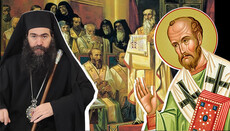
The essence of Metropolitan Tychikos’s case: appeal or inquisition?
Let us recall that the decision of the Synod of the Church of Cyprus regarding Metropolitan Tychikos was adopted in defiance of mandatory procedure. This has been written about many times already, and we will not repeat it here. We will note only that the Cypriot Synod demanded that the hierarch sign a document entitled “Confession of Faith.” In that document he was required to acknowledge the decisions of the 2016 Council of Crete and condemn the practice of “non-commemoration” – the cessation of Eucharistic communion with hierarchs for dogmatic reasons. Metropolitan Tychikos refused to sign the document, stating that he could not condemn something permitted by the sacred canons. We mention this “Confession of Faith” only because it has direct bearing on our article and on the events later reported in the Greek press.
Having been unjustly condemned, Metropolitan Tychikos exercised his right of ekkliton and filed an appeal with the Ecumenical Patriarchate. One would think that here, at the highest instance, the case would finally be examined on its merits: whether the necessary canonical procedures had been observed in Cyprus, whether Tychikos had violated any specific canons that could justify deprivation of his see, and so forth.
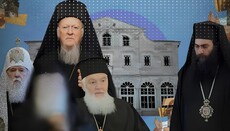
Yet what took place at the session of the Synod of the Ecumenical Patriarchate dashed those hopes.
The well-known Greek journalist Dionysios Makris, writing in Orthodoxos Typos (November 2025, issue 281), published sensational details of the synodal hearing in the case of Metropolitan Tychikos.
According to Makris, instead of probing the substance of the appeal and testing the validity of the accusations made by the Church of Cyprus, the Synod occupied itself with altogether different matters – namely, clarifying the metropolitan’s views on broad church issues that had no direct relevance to his case. Patriarch Bartholomew personally questioned Metropolitan Tychikos in a manner that sounded less like a hearing and more like an interrogation of his ideological reliability.
Here is how Orthodoxos Typos describes the exchange:
Patriarch: “What is your view of ecumenism?”
Tychikos: “Forgive me, Your All-Holiness, but it seems to me that this appeal concerns the problem that arose with the Synod of the Church of Cyprus. What does ecumenism have to do with it? I came here to learn whether I was justly removed. Therefore I cannot answer questions unrelated to my case.”
Patriarch: “Do not evade the question. Do you accept or reject the Holy and Great Council in Crete?”
Tychikos: “Your All-Holiness knows perfectly well that at the time I was not yet a bishop – the Council took place in 2016. I was elected later. By accepting ordination, I effectively accepted the positions of the Church to which I belong. I have remained silent and have not spoken against it.”
Patriarch: “What are your relations with Fr. Theodore Zisis and the non-commemorators?” (Protopresbyter Theodore Zisis is a cleric of the Church of Greece who is under suspension, though not defrocked. He once worked closely with Patriarch Bartholomew, but later ceased commemorating him – translator’s note.)
Tychikos: “Fr. Theodore Zisis was my professor when I studied at the Faculty of Theology of Aristotle University in Thessaloniki. Since then, I have had no particular relationship with him.”
Patriarch: “There are rumors that you intend to ordain the monk Seraphim and become the leader of the non-commemorators. Is that true?”
Tychikos: “No, that is false and an unacceptable slander. I am not even personally acquainted with Monk Seraphim.”
Patriarch: “Do you support non-commemoration?”
Tychikos: “I oppose non-commemoration that leads to schism, Your All-Holiness.”
This dialogue makes plain the format in which the ekkliton was conducted. Instead of examining the substance of the appeal and the violations of the Charter of the Church of Cyprus, the discussion veered into wholly extraneous matters. There was no analysis of the actions of the Cypriot Synod, no summoning or questioning of witnesses, no investigation. In the end, the Ecumenical Patriarchate not only failed to overturn the uncanonical decision of the Church of Cyprus, but also recommended that Tychikos submit to it, leaving him in the status of a bishop without a see.
The process described above can scarcely be called an appellate court. It looked rather like an attempt to use the right of ekkliton as an instrument of pressure, in order to secure political consensus with Archbishop Georgios of Cyprus and to suppress conservative sentiment in the Church. The case was not considered on its merits, and therefore the conclusion reached cannot be regarded as canonically unimpeachable.
Analysis and conclusions: canonical integrity as the foundation of trust
When we examine the case of Metropolitan Tychikos through the prism of the sacred canons and the statements of the Ecumenical Patriarchate itself, we arrive at a number of important – and, sadly, deeply troubling – conclusions. We draw them with full respect for the historic role of the Throne of Constantinople, yet with the firm conviction that truth must stand above all else.
First, the right of ekkliton – the right of appeal – is not a privilege conferring power over other Local Churches, nor an instrument for enforcing “theological unanimity” by coercive means. It is, as Patriarch Bartholomew himself rightly said, a “heavy burden of service” and an “obligatory mission” to safeguard canonical order. The whole purpose of an appeal is to correct a judicial error committed at the local level. If the Synod of the Church of Cyprus removed a metropolitan in flagrant violation of procedure, without trial and without investigation, then Constantinople’s direct canonical duty was to overturn that decision and return the matter for a new and just hearing – or else issue an acquittal.
Second, substituting the subject under consideration is inadmissible in ecclesiastical justice. When a metropolitan appeals the unlawful deprivation of his see, the highest court is obliged to examine precisely the lawfulness of that deprivation. To turn an appellate court into an interrogation about one’s personal attitude toward ecumenism, the Council of Crete, or particular theologians is a gross violation of the elementary principles of justice.
If an appeal is not examined on its merits, but is used instead to test the “correctness” of theological views, then such a decision cannot be recognized as consistent with canonical order. A court that judges not deeds, but convictions, ceases to be a court and becomes an inquisition.
Third, such actions do not strengthen the authority of the Ecumenical Patriarchate – they undermine it, because they empty the very right of ekkliton of all substance. If an appeal is considered only through the prism of loyalty to the decisions and positions of the Phanar, then only those who already share those decisions and positions will be willing – or able – to appeal to it.
The faithful and the episcopate can see that the Phanar, for the sake of political alliances, is prepared to turn a blind eye to glaring canonical violations and to sacrifice the fate of an honest hierarch. The desire not to spoil relations with Archbishop Georgios of Cyprus, who supports Constantinople’s stance on other disputed questions, appears to weigh more heavily than the canons themselves. Under such conditions, trust in the institution of ekkliton rapidly erodes. Why appeal at all, if the outcome depends not on the canons, but on political expediency and willingness to sign the required papers?
All this underscores how critically important it is for the Patriarchate of Constantinople to remain above every form of politics and personal sympathy. The right of ekkliton has meaning only when it is blind to persons and keen-sighted toward the canons. In the case of Metropolitan Tychikos, sadly, we witnessed the reverse: the canons were pushed into the background, while questions of loyalty and ideology were thrust to the fore.
Instead of a conclusion
In assessing the case of Metropolitan Tychikos, it is impossible not to turn to historical parallels. The history of the Church has repeatedly seen situations in which local Synods, yielding to pressure from secular rulers or to their own internal ambitions, issued unjust decisions against their fellow bishops. It is precisely in such moments that the institution of ekkliton was meant to serve as a saving anchor.
Let us recall the case of St. Athanasius the Great, who was repeatedly subjected to unjust condemnations by councils influenced by the Arian heresy. His appeals to the Roman See – which, before the schism of 1054, also possessed the right to receive appeals – were examined on their merits, and the saint was vindicated.
Another example is St. John Chrysostom. Having been unjustly condemned by the Synod of the Oak, he appealed to Pope Innocent I of Rome, who, after examining the case on its merits, rose in defense of the wrongly condemned hierarch, regardless of the political pressure of the imperial court. It was precisely such examples of strict fidelity to the canons and true impartiality that strengthened trust in the highest appellate authorities.
The right of ekkliton is not merely a privilege – it is an immense responsibility. That responsibility lies not only upon those who receive appeals, but upon the whole fullness of the Church, which must remain vigilant to ensure that ecclesiastical justice remains impartial and objective.
Only then can the Church remain “the pillar and ground of the Truth.”