
Green camouflage: Why Christ cursed the fig tree
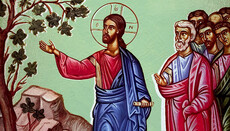
The road from Bethany toward Jerusalem looks deceptively peaceful in spring. Here, where the Judean hills meet the arid wilderness advancing from the east, the sun begins to scorch early. The ascent is steep and exhausting, demanding constant physical effort.
The Gospel stresses an important detail: Christ was hungry. The Savior’s hunger was entirely natural. A traveler who had spent hours climbing beneath the burning rays of the Middle Eastern sun would inevitably grow weary. Around Him lay only parched earth, broken here and there by patches of tough scrub and olive trees with their grayish leaves.
And suddenly, amid this faded landscape, a vivid green patch appears in the distance. It is a fig tree. Its broad branches stretch over the roadside, their lush foliage rustling in the wind. The tree looks as though it has discovered a hidden spring in the middle of the drought and is now eager to proclaim its good fortune to every passerby.
The botany of the fig tree
The agricultural cycle of the fig tree follows a strict biological rhythm. The Evangelist Mark makes a striking observation: “for it was not the season for figs” (Mark 11:13).
On the eve of the Jewish Passover, in March or early April, it would indeed have been pointless to expect the summer fig harvest. Yet the fig tree has a unique feature well known to local shepherds. In early spring, just as the tree begins to awaken, tiny green nodules first appear on its branches. These are the earliest fruit buds – small, undeveloped figs. They are firm, slightly bitter, and low in sugar, but they are edible and can save a hungry traveler from starvation.
We find a description of this agricultural fact, for example, in the Song of Songs: “The fig tree puts forth its green figs, and the vines with the tender grapes give a good smell” (Song of Songs 2:13). Most importantly, these early figs emerge through the bark either before the first leaves appear or at the same time as them.
A trap for unsuspecting travelers
The tree Christ approached seemed to violate every law of Palestinian nature. It stood there completely clothed in green. In the desert landscape, this fig tree was practically shouting its abundance to the entire countryside. Its broad leaves, sometimes as large as a human face, created an aggressive visual illusion.
Any local resident who saw such luxuriant foliage in early spring would have turned off the road without hesitation. If there were leaves, then beneath them the branches should have been heavy with early figs.
The Savior approaches the tree in search of food. He reaches out, parts the broad green fans fragrant with sap – and finds nothing beneath them but dry bark.
The tree was a barren freak of nature, a sterile showpiece that had spent all the moisture drawn from the meager limestone soil on producing a magnificent facade. It had advertised fruitfulness it did not possess, deceived the hopes of a hungry man, and robbed Him of His last expectation of nourishment. Christ rightly curses the fig tree, and it immediately withers to the roots.
This episode often puzzles those who judge the Gospel through the lens of shallow humanism and speak of God’s harshness toward innocent nature. But the biblical context demands a deeper vision, one free from secular clichés.
A sign on the dusty road
To the disciples walking with their Teacher toward Jerusalem, what happened did not look like a spontaneous act. They knew Scripture well and understood the language in which Christ was speaking. The cursing of the fig tree was a classic prophetic act. The Old Testament prophets repeatedly resorted to such visible signs when ordinary words could no longer reach the people.
In prophetic imagery, the fig tree was almost always a symbol of the people’s religious life and spiritual condition. The Prophet Hosea left these poetic words: “I found Israel like grapes in the wilderness; I saw your fathers as the first ripe in the fig tree at her first time” (Hosea 9:10).
The fig tree on the Mount of Olives was a living illustration of what was taking place in those days behind the walls of the Jerusalem Temple.
The vast and elaborate religious system, the magnificent vestments of the high priests, the pomp of the Temple choirs, the endless streams of pilgrims, and the thousands of animals offered in sacrifice were nothing more than a grand facade. Outwardly, everything suggested that faith was flourishing and bearing fruit. Yet beneath this dense foliage of rituals and correct words, the essential things were missing – living love, compassion, and basic justice.
St. John Chrysostom said that the Savior cursed the tree not because He was unable to endure hunger, but to instruct His disciples. He wished to show them clearly that He possessed the power not only to show mercy but also to judge, and that the outward form of piety without spiritual fruit is doomed to inevitable destruction.
The tragedy of beautiful facades
The unflinching truth of this Gospel episode strikes mercilessly at our conscience, especially now, when the familiar world around us is collapsing and leaving people alone with grief and scorched souls.
We too have learned to construct magnificent facades around ourselves. We post all the right pious words on social media, display all the right profile pictures, and recite ancient canons and the Holy Fathers by heart. Our outward camouflage is flawless.
But when a broken person approaches us – someone who has lost loved ones, someone dried up by pain, searching for simple human warmth, understanding, or merely a piece of bread – what do they find beneath our leaves? All too often, they discover only the rustling of dead formulas and the cold indifference of Pharisaism.
The simulation of piety is the opposite of true poverty of spirit. A person who honestly admits his spiritual barrenness is closer to salvation than one who has dressed himself in the costly garments of imaginary righteousness. A community of people faithful to Christ, however, is marked by solidarity – by believers sharing their last earnings and their final crumb of bread with a hungry traveler.
Now is the time to look beneath our own leaves and see whether we possess any spiritual fruit, before the One walking along the road draws too near and curses us for our barrenness.