



Resurrection’s victory over the ancient mind
The Apostle Paul reminds us of the central foundation of the Christian faith. The Savior’s Resurrection is not a beautiful myth but a historical fact that transformed the very fabric of existence.
The apostolic reading for the 12th Sunday after Pentecost is a passage from the First Epistle of the Holy Apostle Paul to the Corinthians (1 Cor. 15:1–11). This text holds an exceptional place in the entire New Testament. In it, the Apostle Paul turns to the central question of the Christian faith – the Resurrection of Christ and the universal resurrection of the dead, a concept disputed by some members of the Corinthian community. The historical significance of this passage lies in the fact that it contains the earliest recorded formula of the Christian Creed, one that took shape long before the four Gospels were written.
In 1 Corinthians 15:3–4 we read: “For I delivered to you first of all that which I also received: that Christ died for our sins according to the Scriptures, and that He was buried, and that He rose again the third day according to the Scriptures...” The Apostle uses technical terms from the Jewish tradition of transmitting sacred tradition: “delivered” and “received.” This shows that Paul is not constructing a teaching of his own but passing on an objective historical reality preserved by the Church of Jerusalem. Most likely, Paul received this formula during his meeting with Peter and James around A.D. 35–36 – only a few years after the Crucifixion.
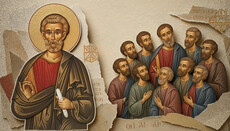
Paul builds a rigorous case for the historicity of the Resurrection by listing its witnesses: Cephas (Peter) – the first among the apostles; the Twelve closest disciples; and more than five hundred brethren at once. Paul emphasizes that “the greater part remain to the present” – a direct invitation to his opponents to go and question the eyewitnesses themselves. Then come James, the brother of the Lord, all the Apostles, and finally Paul himself, to whom Christ appeared on the road to Damascus. For Paul, the Resurrection is neither a myth nor the mystical experience of a single individual, but a historical fact anchored in a specific time and place.
The clash between the ancient and Semitic mind
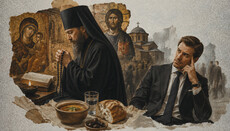
The Corinthians’ main problem was not that they doubted the Resurrection of Christ Himself, but that they were saying that “there is no resurrection of the dead” (1 Cor. 15:12). Here lies a profound conflict between the biblical (Semitic) and Hellenistic (Greek) worldviews.
In Greek philosophy – especially under the influence of Platonism and Orphism – the body was regarded as the prison of the soul. For the Greek, salvation meant freeing the immortal soul from the bonds of crude, imperfect matter. The idea that the body would rise again seemed madness and absurdity to the educated Greek. Recall the reaction at the Athenian Areopagus in Acts 17:32: “And when they heard of the resurrection of the dead, some mocked...”
For the Jewish mind, however, a human being is not a soul imprisoned in a body, but a single, indivisible psychosomatic being. Without the body, the human person is incomplete – merely a shadow in Sheol.
God’s salvation of man necessarily includes the salvation and transformation of his entire nature, including the material body. Paul brings about a philosophical revolution: he declares that matter is not evil. It was created by God and is destined for eternity. Christianity overcomes the Gnostic disdain for the body, affirming through the Resurrection the eternal dignity of human embodiment.
Three pillars of apostolic teaching
The theology of this passage is structured around several key themes.
- Rootedness in Scripture. Twice Paul repeats the phrase: "Christ died... according to the Scriptures" and "rose again... according to the Scriptures." This indicates that Golgotha and the Empty Tomb are not accidents, but the fulfillment of the eternal Divine plan reflected in the Old Testament. Christianity is rooted in the history of salvation begun by the God of Israel.
- The dogma of redemption. The phrase "Christ died for our sins" introduces a most important teaching. The death of Christ bears the character of a redemptive sacrifice that destroys the wall of estrangement between the Creator and creation, brought about by sin.
- The unity of apostolic witness. At the end of the passage Paul writes: "Therefore, whether it was I or they, so we preach and so you believed" (1 Cor. 15:11). In Corinth, divisions flourished ("I am of Paul," "I am of Apollos," "I am of Cephas"). Paul destroys this particularism by declaring that the core of the Gospel is absolutely identical among all the apostles. The Church is one in its chief dogma, despite the diversity of character and paths of its preachers.
The secret of man and God working together
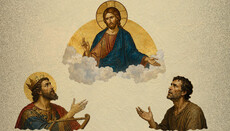
Paul calls himself “one born out of due time” – in the original, literally a “miscarriage,” a prematurely born child. It is an expression of the deepest humility. He acknowledges his terrible sin – his persecution of the Church of God. Yet against this very background, the Christian teaching on grace is revealed: “But by the grace of God I am what I am, and His grace toward me was not in vain; but I labored more abundantly than they all, yet not I, but the grace of God which was with me” (1 Cor. 15:10).
Here we find a formulation of the fundamental Orthodox principle of synergy – the cooperation of God and man.
On the one hand, everything Paul has is a pure gift from God, who works through him. On the other hand, that gift requires a response – personal effort and labor (“I labored more abundantly than they all”). Grace does not act by force; it becomes active through man’s free will.
The reading for the 12th Sunday after Pentecost pulls the believer out of the realm of abstract moralizing and brings him back to the heart of Christianity. Paul reminds us: Christianity is not simply a “system of correct values” or an “ethical code.” Christianity is fidelity to an event.
If Christ did not physically rise from the dead in history, then Christianity is the greatest deception of all, and believers are “of all men the most pitiable” (1 Cor. 15:19). But if He did rise, then biological death has been overcome, matter is sacred, and human labor carried out in synergy with Grace has eternal value.