
Freedom without registration: a theology of exiles
In the wild, crustaceans periodically go through a difficult phase. They shed their hardened chitinous shells. For a long time, the shell protects them from sharp rocks and predators, but eventually it becomes too tight and even makes it harder to breathe. When the defenseless creature crawls out of its shell, even a single grain of sand on the seabed can inflict a deep wound. Yet without this act of liberation, the crab is doomed to a slow death inside its own cocoon. It simply cannot grow.
Breaking the illusion of comfort
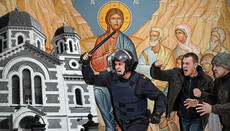
The familiar life of the Church – with its state patronage, protected property, and stability – was just such a sturdy shell. We grew into it over long years of calm and measured ministry. And then this shell suddenly began to crack and crumble.
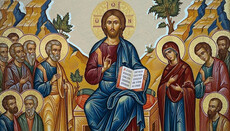
We are bewildered and perplexed: what is happening to us? But if one opens the Sermon on the Mount, it becomes clear that the last Beatitude speaks precisely of those who are persecuted for righteousness' sake. It differs from the rest. In the preceding words, Christ uses the detached third person, speaking of the poor in spirit or the meek. But here the Savior addresses His disciples directly, looking them in the eyes: "Blessed are you when people insult you, persecute you and falsely say all kinds of evil against you because of Me" (Matt. 5:11). This is followed by a demand that may seem like madness: "Rejoice and be glad, because great is your reward in heaven" (Matt. 5:12).
n the original text, the verb is an emphatic one, calling us to leap for joy and exult. Such a command is hard to accept when before our eyes stand the sealed doors of churches that have been plundered and desecrated. We perceive persecution as a grave injustice. We tend to believe that it is only a temporary disruption that will soon pass.
But in the consciousness of Christians of the early centuries, exile was a natural marker of spiritual growth.
A person who honestly strives to fulfill the Gospel commandments, becoming meek, merciful, and peace-making, undergoes an inner transformation. They no longer merge seamlessly with a godless society. Therefore, even their visible presence begins to irritate a system built on selfishness and lies. And the broken world activates a mode of rejection, pushing the believer to the margins. Exile only proves that we have ceased to belong to the sinful world.
The courage of the Byzantine exiles
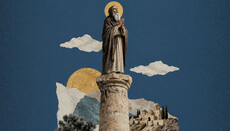
Let us look back to the year 379. Constantinople then shone with wealth, but the Christian community there was on the verge of survival. The Arian heretics, enjoying the full support of the imperial court, controlled all the church buildings of the capital. The Orthodox had not a single legal church, not a penny in their treasury, and certainly no legal registration. And it was into this hostile city that Saint Gregory the Theologian arrived.
He was frail in health, pale, poorly dressed, and had a pronounced lisp, which made him the object of open ridicule among the sophisticated residents of the capital. Yet he did not organize protests or bombard the courts with appeals. Instead, he found a small room in the private home of one of his relatives. In that cramped, stuffy chamber, people stood shoulder to shoulder as they celebrated the Divine Liturgy.
In the name of this community – "Anastasia," meaning "Resurrection" – a manifesto was concealed. It was here, in exile, stripped of visible privileges, that the faith of the people begins to rise again.
Once, during a Paschal service, a crowd of enraged Arians burst into this room, pelting the worshippers with stones. One monk was killed, and Saint Gregory was dragged to court and accused of murder. But even in this wild situation he maintained profoundly calm. His words, spoken against the Arians, expose our own faintheartedness: "They have temples, but we have God; moreover – we ourselves are temples of God... They have the people, but we have angels. They have arrogance, but we have faith."
The saint understood that the possession of church buildings is a dangerous illusion. When the keys to the cathedrals are taken from us, we lose only the right of ownership but not God. The state may seize a building, but it cannot confiscate the Kingdom of Heaven, because its address is found within our soul, beyond the reach of any bailiff’s hands.
Freedom within us
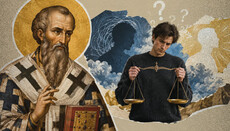
Saint John Chrysostom reflected on this commandment from the Sermon on the Mount in the following way: "Christ did not say: 'If you do not grieve,' but: 'If you rejoice' (you will receive blessedness – Ed.). For to feel no sorrow is a matter of nature, but to rejoice amid sorrows is a matter of grace."
It grieves us to lose what we have poured our soul into. This is our human nature speaking. But the joy which the Holy Fathers write of arises from the understanding that we have at last been found worthy of this exile that leads to salvation.
We do not know how much longer the dismantling of the scenery of our lives will continue. It is foolish to hope that tomorrow everything will be set right and we will return to our former stability. But the experience of exile proves: the Church is invulnerable as long as She does not attempt to bargain with Her conscience for the sake of preserving comfort. The loss of property becomes a painful process. We have leaned too long on external guarantees, having forgotten how to trust God in the midst of a storm.
One can rewrite cadastral numbers in registries, hang a padlock on oak doors, and post guards at the gates. But how does one evict a person from the home he carries within himself? For the Kingdom of Heaven has neither an earthly registration address nor a cadastral number; and no court order can evict anyone from it.